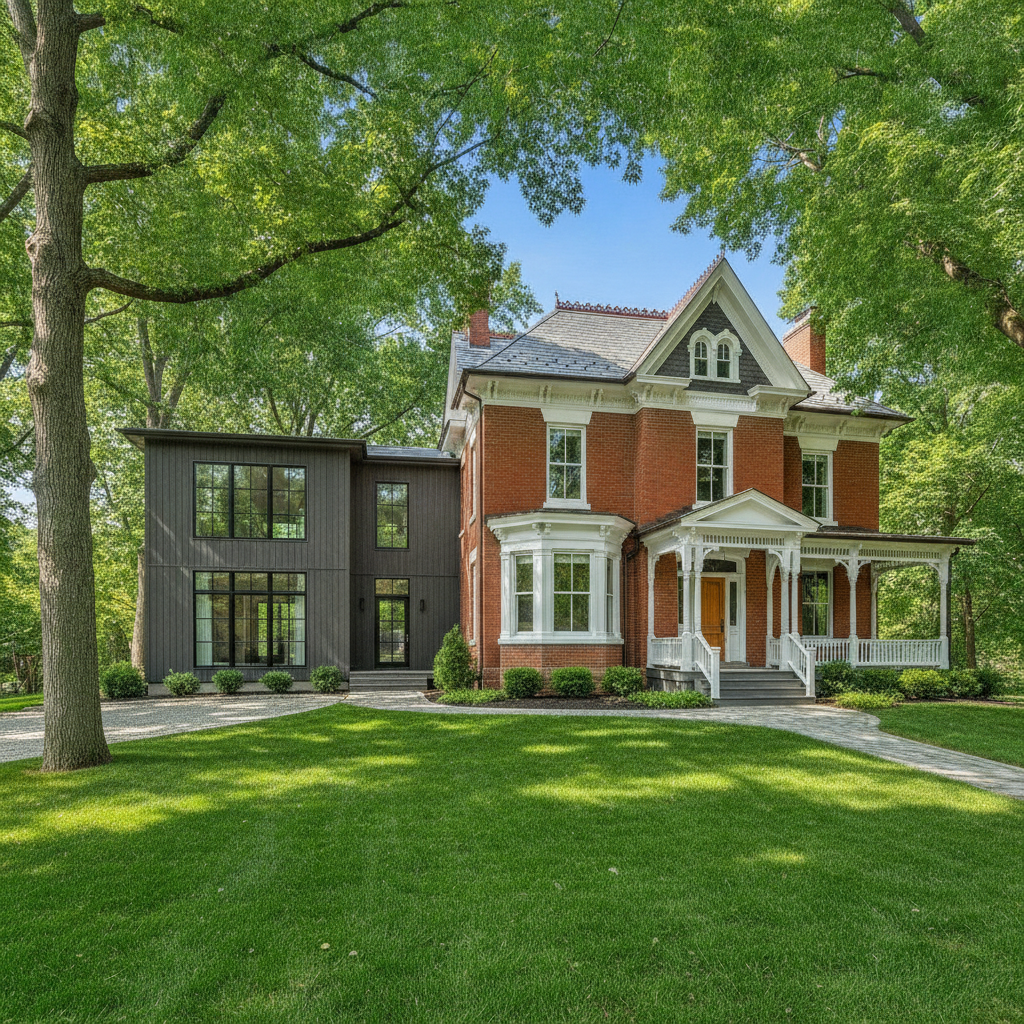
Choosing windows for a Greenburgh, NY home: historic character vs. modern performance
In Greenburgh, NY, the question of which windows to buy often comes down to what era your house comes from. The Town of Greenburgh spans six incorporated villages — Irvington, Tarrytown, Ardsley, Dobbs Ferry, Hastings-on-Hudson, and Elmsford — plus unincorporated hamlets like Hartsdale and Edgemont. That geography covers a wide arc: Italianate and Gothic Revival Victorians on the Hudson riverfront, Gilded Age estate subdivisions from the early 1900s, and postwar ranch and split-level tracts further east. The right window for a contributing building in Irvington’s Historic District looks nothing like the right window for a 1960s Hartsdale Colonial going through a full replacement. This guide walks through both ends of that spectrum and everything in between.
The Greenburgh housing landscape: what you’re working with
Understanding the housing stock helps narrow the window decision before you look at a single product.
Riverfront villages: 19th- and early-20th-century architecture. Irvington and Tarrytown sit on the Hudson and have a high concentration of pre-1930 housing. Irvington’s NRHP-listed historic district (added to the National Register of Historic Places in January 2014) includes 212 contributing buildings, spanning architectural styles from Italianate and Greek Revival to Colonial Revival. Tarrytown’s housing stock is similarly layered, incorporating Gothic Revival structures such as the Lyndhurst mansion, Neoclassical public buildings, and a streetscape shaped by the Gilded Age’s “Millionaires’ Row” along the Hudson.
Hastings-on-Hudson and Dobbs Ferry. Both villages developed industrially in the late 1800s and incorporated working-class and professional housing on hillside lots. Victorian-era origins are evident in the gabled streetscapes and double-hung proportions that define many blocks.
Hartsdale and Edgemont (unincorporated Greenburgh). The mid-20th century brought significant suburban growth to the unincorporated hamlets east of the parkways. Ranch homes, cape cods, and split-levels from the 1950s and 1960s dominate much of Hartsdale and Edgemont, and these houses call for a different window calculus than the riverfront villages.
Historic homes: matching character without sacrificing performance
Older homes in Greenburgh’s riverfront villages were designed with specific window proportions — tall, narrow openings on Italianate and Victorian facades; transomed six-over-six or eight-over-eight sashes on Greek Revival and Colonial Revival structures; wide picture windows or grouped casements on Craftsman-influenced bungalows. Swapping those proportions out for the wrong replacement can flatten the character of a house that’s been intact for 140 years.
Double-hung windows: the traditional default
For most Victorian, Italianate, and Colonial Revival homes in Irvington, Tarrytown, Dobbs Ferry, and Hastings, a double-hung window — two operable sashes in a single frame, sliding vertically — is still the correct choice for street-facing elevations. Double-hung windows sit flush with the wall (nothing projects outward), accept standard window air conditioners, and their vertical proportions replicate the look of the original sash-and-weight windows these homes were built with.
Today’s double-hung replacements are substantially more efficient than the originals. A quality double-hung window with insulated glass, low-E coatings, and warm-edge spacers can easily meet the state energy code and qualify for ENERGY STAR’s Northern zone rating. The sliding sash relies on weatherstripping rather than a compression seal, so air infiltration is slightly higher than on a casement — per the U.S. Department of Energy, sliding windows generally allow somewhat more air leakage than hinged styles — but the gap is modest with a well-installed, quality unit.
Historic overlay districts: an extra layer of review
If your home is in a formal historic overlay district, window replacement involves more than picking a product. In Irvington, exterior changes to properties within the Historic Overlay District — including window replacement — are reviewed by the Architectural Review Board, which meets on the fourth Monday of each month. Homeowners and contractors need to verify whether a property is a “contributing building” under the overlay before ordering, because approved materials and profiles can differ from a standard replacement catalog. Contact the Irvington Building Department before finalizing any product selection.
In Tarrytown, the Village Code empowers an Architectural Review Board to review alterations affecting a building’s exterior appearance, and changes within the village’s historic districts require a certificate of appropriateness (Village of Tarrytown Village Code, Ch. 9 and Ch. 191). Check with the Tarrytown Building Department before proceeding with a window order on any structure in or near a protected block.
In both cases, aluminum-clad wood or fiberglass windows with historically correct profiles and divided-light patterns are typically the most approvable choices — they can replicate the look of original wood sashes while offering modern thermal performance.
Six-over-six vs. simulated divided lights
Original double-hung sashes in the region were often divided into multiple panes (lites) by wood muntins — six-over-six, eight-over-eight, or two-over-two configurations depending on the era and style. Modern replacements handle this one of two ways:
- True divided lights (TDL): individual panes separated by structural muntin bars. Authentic look and depth; preferred in historic overlay districts. More joints to seal.
- Simulated divided lights (SDL): one insulated glass unit with decorative muntin bars bonded to the interior and exterior surfaces, sometimes with a spacer bar between the panes. Easier to seal; good thermal performance; less depth and shadow line than TDL.
For homes subject to Architectural Review Board oversight in Irvington or Tarrytown’s protected districts, ask the board which they prefer before placing an order. For homes outside a formal district, SDL is a practical option that satisfies most historic aesthetic goals.
Modern homes: performance first, then style
Ranch homes, split-levels, and contemporary construction in Hartsdale and Edgemont operate under a different set of priorities. These houses rarely have strict historic appearance requirements, and the window openings are often wider and more horizontal than the tall vertical openings on Victorian facades. The conversation shifts to thermal performance, ventilation, and how the window interacts with a room’s layout.
Casement windows: the efficiency leader
A casement window is hinged on one side and swings outward with a hand crank. When closed, the sash pulls against a continuous compression gasket around its entire perimeter — a tighter seal than the sliding weatherstripping on a double-hung. Per the U.S. Department of Energy, casement windows are among the most air-tight operable styles available, and the compression seal is the structural reason. For mid-century homes with wide horizontal openings over a kitchen sink, in a sunroom, or along a rear patio wall, casement windows are the natural fit: easy crank operation from any reach position, full sash ventilation, and unobstructed glass area.
The trade-offs: an open casement sash projects outward, so it is a poor choice over a walkway, driveway, or anywhere people pass close to the wall. It will not accept a standard window air conditioner. The crank mechanism is the most likely single component to need service over the window’s life.
Awning windows
An awning window is a horizontal-format cousin to the casement — hinged at the top and cranked open from the bottom. It can stay cracked open in light rain (the sash sheds water) and is often used below a fixed picture window or over a kitchen counter. In Hartsdale and Edgemont ranch homes with wide, lower windows, an awning can be paired with fixed units to create a ventilating window wall without sacrificing the view.
Picture windows and fixed lites
Where the goal is daylighting and view — living rooms, stairwells, gable ends — a fixed picture window (no operating hardware, no weatherstripping gaps) can achieve the lowest U-factors of any window type. Because it does not open, there is no leakage path beyond the frame and glazing seal. Many mid-century and contemporary Hartsdale and Edgemont homes benefit from upgrading a dated, single-pane fixed unit to a current insulated glass assembly with low-E coatings.
Energy performance: what the code requires in Greenburgh
All of these window types are available in versions that meet or exceed New York’s energy code, and the framing matters less than the glass package.
State code floor. Westchester County is in IECC Climate Zone 4. Under the 2020 New York State Energy Conservation Construction Code (Table R402.1.2), replacement windows must meet a maximum U-factor of 0.32 and a maximum SHGC of 0.40. This is the code floor — the minimum to pass inspection.
ENERGY STAR: the better target. Greenburgh falls in ENERGY STAR’s Northern climate zone. The current Version 7.0 specification (in effect since October 23, 2023) tightens the bar to a U-factor of 0.22 or lower, with a minimum SHGC of 0.17 to allow beneficial winter solar gain. ENERGY STAR v7.0 also requires air infiltration no greater than 0.30 cfm/ft² (ASTM E283). Targeting ENERGY STAR means meaningfully better performance than the code floor, especially in older Greenburgh homes where drafts and heat loss through windows are significant.
Low-E glass and gas fill. A U-factor of 0.22 typically requires a double- or triple-pane insulated glass unit (IGU) with a low-emissivity (low-E) coating and an argon or krypton gas fill between the panes. Low-E coatings reduce radiant heat transfer across the glass. In Greenburgh’s Hudson Valley climate — real freeze-thaw winters, humid summers, occasional nor’easters — that combination significantly reduces heat loss in January and unwanted solar gain in July, depending on the coating’s spectral tuning.
Village-level differences. The six incorporated villages in Greenburgh run their own building departments. Before finalizing any window order, confirm the current replacement-window energy requirement with the specific village building department, not just the town, because requirements can vary.
Permits in Greenburgh: village jurisdictions matter
Under New York’s Uniform Code administration (Executive Law Section 381; NYS DOS Legal Memorandum LG03), each incorporated village administers the building code and issues permits within its own limits, while the town covers the area outside the villages. So the Town of Greenburgh does not issue building permits for properties within its six incorporated villages, and each village runs its own building department. Here is how that breaks down for window replacement:
- Irvington: Permits for residential improvements are required; applications go through CloudPermit. Properties in the Historic Overlay District also need Architectural Review Board approval. Contact the Irvington Building Department.
- Tarrytown: Has its own Building Department. Under the Village Code, the Architectural Review Board reviews alterations affecting a building’s exterior appearance, and changes within a historic district require a certificate of appropriateness (Village of Tarrytown Village Code, Ch. 9 and Ch. 191). Contact Tarrytown Building Department directly.
- Ardsley, Dobbs Ferry, Hastings-on-Hudson, Elmsford: Each has a separate building department. Requirements vary.
- Unincorporated Greenburgh (Hartsdale, Edgemont, Fairview): Permits are issued by the Town of Greenburgh Building Department, which handles the unincorporated town (not the villages, which maintain their own programs).
Gunner Roofing pulls and manages the required building permits on every project, regardless of which jurisdiction applies. Confirm the active permit requirements — including any local energy amendment — with the relevant building department before work begins.
Side-by-side: window styles by home type
| Window style | Best fit | Greenburgh context |
|---|---|---|
| Double-hung | Victorian, Italianate, Colonial Revival, Greek Revival | Irvington, Tarrytown, Dobbs Ferry, Hastings riverfront villages |
| True divided light (TDL) | Homes in or near historic overlay districts | Required or preferred by ARBs in Irvington and Tarrytown protected areas |
| Simulated divided light (SDL) | Period character without formal district review | Hartsdale/Edgemont older Colonials outside overlay areas |
| Casement | Mid-century ranch, cape cod, split-level; kitchens; additions | Hartsdale and Edgemont postwar housing; rear elevations |
| Awning | Wide horizontal openings; kitchen/counter locations | Ranch homes; paired with fixed picture windows |
| Fixed picture | Daylighting and view; maximum thermal efficiency | Living rooms, stairwells, gable ends across all eras |
Frequently asked questions
Do I need a permit to replace windows in Greenburgh, NY?
It depends on which part of Greenburgh your home is in. The Town of Greenburgh and its six incorporated villages — Irvington, Tarrytown, Ardsley, Dobbs Ferry, Hastings-on-Hudson, and Elmsford — each have separate building departments that issue their own permits (under New York’s Uniform Code, an incorporated village administers permits within its own limits). If your home is in one of the villages, apply to that village’s building department, not the town. For unincorporated Greenburgh (Hartsdale, Edgemont), apply to the Town of Greenburgh Building Department. Gunner Roofing handles permit applications on every project.
What window U-factor is required in Greenburgh?
Westchester County, including all of Greenburgh, falls in IECC Climate Zone 4. The 2020 New York State Energy Conservation Construction Code (Table R402.1.2) sets a maximum fenestration U-factor of 0.32 and maximum SHGC of 0.40 as the code floor. However, individual village building departments may enforce stricter local amendments — confirm with the applicable jurisdiction before ordering. For better performance, target ENERGY STAR Version 7.0 Northern zone criteria: U-factor of 0.22 or lower.
Can I replace windows in Irvington’s Historic District without Architectural Review Board approval?
Not for exterior changes. Properties within Irvington’s Historic Overlay District require Architectural Review Board (ARB) review for any exterior alteration, including window replacement. The ARB meets the fourth Monday of each month. Verify whether your property is a contributing building under the overlay before selecting a window product, as the ARB may require specific profiles, materials, or divided-light configurations. Contact the Irvington Building Department to confirm.
What is the difference between a true divided light and a simulated divided light window?
A true divided light (TDL) window has individual glass panes separated by structural wood or aluminum muntin bars — the same construction as original historic sashes. A simulated divided light (SDL) window uses one insulated glass unit with decorative muntin bars bonded to the inside and outside surfaces, sometimes with a spacer bar between panes. TDL looks more authentic (deeper shadow lines, visible muntin depth) and is typically preferred in historic overlay district reviews. SDL achieves a similar period appearance with better thermal efficiency and is a practical option for homes outside formal historic districts.
Are casement windows better than double-hung for a Hartsdale ranch home?
Often, yes — at least for the kitchen, rear elevations, and rooms where ventilation and energy efficiency matter most. Casement windows seal with a continuous compression gasket around the full sash perimeter, which limits air leakage more effectively than the sliding weatherstripping on a double-hung. Per the U.S. Department of Energy, casements are among the most airtight operable window styles. They also open fully for ventilation and operate easily from a counter or awkward reach. The downside: they project outward when open and will not accept a standard window air conditioner. For rooms that depend on a window AC unit, double-hung is still the right choice.
Does Gunner Roofing install windows in Greenburgh?
Yes. Gunner Roofing is an Andersen Certified Elite contractor and installs windows across Greenburgh and Westchester County, including the riverfront villages and the unincorporated hamlets. Gunner is fully licensed, insured, and bonded in New York and pulls the required building permits on every project as part of the job.
Get a fast, free quote
No inspection visit needed - we measure your roof from satellite imagery and send your quote.