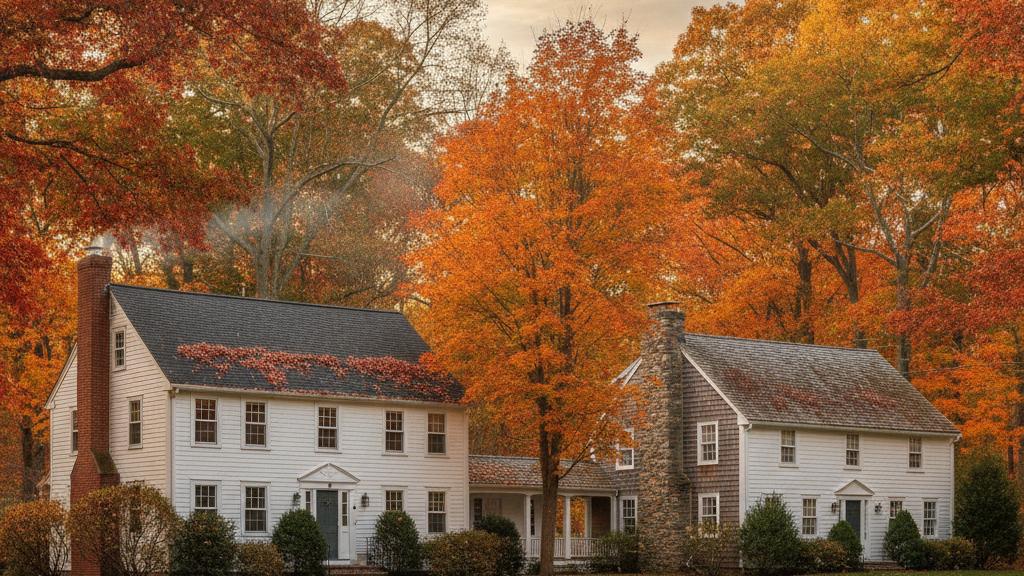
For most NY and CT homeowners, the answer is architectural asphalt shingles — specifically a high-performance line like GAF Timberline HDZ or UHDZ — because they hit the right balance of cost, lifespan, wind resistance, and installer availability in this climate. That said, the “best” roof depends on your budget, your home’s architecture, and how long you plan to stay. Here’s a plain-language breakdown of every major option.
The Four Roofing Types Worth Considering in NY & CT
Before the detailed comparison: the Northeast’s climate — freeze-thaw cycles from November through March, Nor’easters, summer thunderstorms, and humid coastal air — rules out some materials that perform well in dryer or milder climates. The four that hold up here are architectural asphalt shingles, standing-seam metal, synthetic composite (slate and shake profiles), and natural cedar shake. Each has a different cost, maintenance demand, and aesthetic profile.
| Material | Rated lifespan (ideal) | Typical NY/CT lifespan* | Cost tier | Wind resistance |
|---|---|---|---|---|
| Architectural asphalt (GAF Timberline HDZ/UHDZ) | 30–50 yrs | 22–35 yrs | $ | Up to 130 mph (WindProven system) |
| Standing-seam metal | 40–70 yrs | 35–55 yrs | $$–$$$ | Very high; interlocking seams |
| Synthetic composite (DaVinci, Brava) | 50 yrs (mfr) | 40–50 yrs | $$$ | Class 4 impact, high wind ratings |
| Natural cedar shake | 20–30 yrs | 15–22 yrs | $$–$$$ | Moderate; depends on grade + treatment |
*Typical NY/CT lifespan reflects real-world reduction from freeze-thaw, ice-dam exposure, and coastal humidity relative to ideal-condition rated figures (baseline from InterNACHI life expectancy chart; NY/CT adjustment per climate). Shorter end of range for coastal or exposed sites.
Architectural Asphalt Shingles — The Most Common Answer
Architectural (dimensional) shingles are the dominant choice in Westchester and Fairfield County for a practical reason: they’re well-matched to the housing stock and the climate, they’re widely available from established manufacturers, and they can be properly installed and fully warranted by a credentialed contractor.
Gunner leads with GAF Timberline HDZ and UHDZ shingles. On GAF roof installations, Gunner installs the full WindProven-qualifying system — GAF LayerLock shingles with the required 4-nail pattern, GAF Starter Strip Shingles at eaves and rakes, qualifying ridge cap shingles, qualifying roof deck protection, and proper attic ventilation. That complete assembly is what makes a GAF roof WindProven- and enhanced-warranty-eligible.
Because Gunner is a GAF Master Elite® 3-Star President’s Club contractor — a designation fewer than 3% of roofing contractors nationally qualify for — GAF Golden Pledge® and Silver Pledge™ enhanced warranties are available as upgrade options on qualifying installations.
When asphalt shingles make sense: most colonial, cape, split-level, and ranch homes in the region; replacement projects where budget is a primary constraint; homes in development neighborhoods where asphalt is the norm and curb appeal compatibility matters.
Fall prep angle: if your asphalt shingles are more than 15 years old, have granule loss in the gutters, or show curling at the edges after this summer’s heat cycles, fall is the ideal window for replacement — before temperatures drop below the installation threshold for proper shingle sealing. Gunner tracks weather forecasts and sequences roofing projects to minimize open-deck exposure.
Standing-Seam Metal — The Long-Game Option
Metal roofing has gained real traction in the Northeast over the past decade, and for good reason. A properly installed standing-seam system sheds snow efficiently, doesn’t accumulate ice dams the way horizontal shingle courses can, and holds up well through the kind of wind events — Nor’easters, tropical remnants, October storms — that stress conventional roofing.
The trade-off is upfront cost. Metal roofing runs materially higher than asphalt per square foot installed, though a long service life can make the math work for homeowners planning a 30-plus year horizon.
What to verify with your contractor: proper expansion-gap detailing at penetrations and perimeter trim is critical in a climate with wide seasonal temperature swings. Metal that can’t move freely will telegraph stress over time. Also confirm the substrate decking is sound — metal over rotted or soft decking is a common callback.
When metal makes sense: homes with architectural lines that suit standing seam (contemporary, farmhouse-style, steep-pitch saltboxes); owners who want a once-in-a-generation roof and are willing to pay for it; properties where snow shedding is a priority.
Synthetic Composite — Slate and Shake Aesthetics Without the Maintenance
If you love the look of natural slate or cedar shake but don’t want the weight, the maintenance cost, or the fragility of real slate, synthetic composite is worth a serious look. Products like DaVinci Roofscapes (engineered composite slate and shake) and Brava Roof Tile (composite Spanish tile, slate, and cedar shake profiles) are designed specifically for steep-slope, cold-weather conditions.
Gunner is both a DaVinci Masterpiece Contractor and a Brava Preferred Contractor — meaning crews have manufacturer-level training on these products, which matter more than with standard shingles because composite profiles require precise layout, specific fastening patterns, and often custom flashing detailing at penetrations.
Both product lines carry Class 4 impact ratings and high wind resistance specs, and they’re lighter than natural slate, which simplifies structural considerations on older homes. Manufacturer-stated service life for these products is around 50 years; real-world NY/CT performance at the higher end of that range is still being established as these products mature, but they’re engineered for climates like ours.
When composite makes sense: historic homes or architecturally significant properties where a slate or shake aesthetic is expected; situations where real slate is cost-prohibitive or the roof structure can’t bear the load; owners who want premium curb appeal with low ongoing maintenance.
Natural Cedar Shake — Authentic, But Demanding in This Climate
Natural cedar shake has an authentic look that no composite has fully replicated, and it’s been used on Northeast homes for generations. Gunner is a member of the Cedar Shake & Shingle Bureau (CSSB), which governs the certification and structural install frameworks for authentic wood shakes.
In a wet, freeze-thaw climate, untreated or poorly maintained cedar can develop moss, split, cup, and lose its weather seal faster than the rated lifespan suggests. The typical NY/CT service life on cedar shake — with good maintenance — is on the shorter end of the range (see table above). Without active maintenance (cleaning, re-treatment, periodic inspection), real-world lifespan can fall well below that.
When cedar makes sense: historic district properties where the look is architecturally appropriate and required; owners committed to ongoing maintenance; projects where budget allows for the premium material cost and anticipated upkeep.
What About Synthetic Slate Tiles (Clay or Concrete)?
True clay tile and concrete tile see limited use in NY/CT residential work compared to the Mid-Atlantic or Southeast. Weight load on older home structures, freeze-thaw stress on grout and mortar, and limited local installer expertise are the main factors. For homeowners drawn to a tile aesthetic, synthetic composite products (DaVinci, Brava) are a more practical path in this climate.
How to Decide: A Simple Framework
- Budget and horizon: if you’re planning to sell within 10 years, a quality asphalt shingle replacement is probably the right call — it delivers strong curb appeal without overinvesting. If you’re staying 25+ years, metal or composite starts to make financial sense.
- Architecture and neighborhood: a Cape Cod in a Westchester subdivision usually calls for asphalt. A 19th-century Victorian near a historic district may want composite slate. Match the roof to the house.
- Maintenance tolerance: cedar shake requires active maintenance; asphalt and metal require periodic inspection but are relatively low-touch; composite lands in between.
- Contractor certification: with composite products especially, who installs it matters. A DaVinci Masterpiece Contractor or Brava Preferred Contractor has trained specifically on those systems. For GAF, Master Elite status means access to the enhanced warranty tiers that a standard installer can’t offer.
Every Gunner roof replacement includes ice-and-water shield installed to meet or exceed code minimums, leak barrier through all valleys, step and counter-flashing at all penetrations, and proper attic ventilation — across all material types.
FAQ
Which roof type lasts longest in New York and Connecticut? In real-world NY/CT conditions, standing-seam metal and high-quality synthetic composite (DaVinci, Brava) tend to outlast architectural asphalt shingles over a long horizon. Asphalt shingles — particularly GAF Timberline HDZ/UHDZ installed as a full qualifying system — typically last in the range of 22–35 years in this climate (per InterNACHI ideal-condition baseline, adjusted for freeze-thaw and coastal humidity). Metal and composite can extend that significantly, at higher upfront cost.
Is metal roofing a good choice for homes in the Northeast? Yes, for the right home. Standing-seam metal sheds snow and ice efficiently, handles wind loads well, and has a long service life. The higher upfront cost and specific detailing requirements (expansion gaps, penetration flashing) mean contractor selection matters. It’s a better fit for contemporary or farmhouse-style architecture than traditional Colonials.
What roof type is best for a historic home in Westchester or Fairfield County? It depends on what the home’s architectural style and any applicable historic-district requirements call for. Synthetic composite products (DaVinci composite slate, Brava cedar-shake profile) can match the look of natural slate or shake while offering better practical performance in a freeze-thaw climate. Requirements vary by municipality; confirm with your local building department or historic-district commission before choosing a material.
How do I know when to replace vs. repair my existing roof? As a general rule: if damage is isolated and the surrounding shingles are in good shape, repair makes sense. If shingles are past the midpoint of their service life, show widespread granule loss, or have had multiple repair events, a full replacement is usually the better investment — especially heading into fall and winter in NY/CT. Gunner offers storm-damage inspections on request.
Does GAF Master Elite status affect my warranty options? Yes. Because Gunner is a GAF Master Elite contractor, GAF Golden Pledge® and Silver Pledge™ enhanced warranties — which offer extended workmanship coverage — are available as upgrade options on qualifying GAF installations. These warranty tiers aren’t available through non-Master-Elite contractors.
Is fall a good time to replace a roof in NY or CT? Fall is one of the better windows — temperatures are still in the range needed for proper shingle sealing, and you’re getting the roof buttoned up before the freeze-thaw cycle intensifies. The main constraint is cold nights: as temperatures drop consistently, asphalt shingle installation has thermal requirements that limit the season. Booking in early-to-mid fall gives you the most scheduling flexibility.
Ready to get a straight answer on which roof is right for your home? Get a free, no-obligation estimate at GunnerRoofing.com.
Get a fast, free quote
No inspection visit needed - we measure your roof from satellite imagery and send your quote.