For most Greenburgh homeowners, a well-specified double-pane window — argon-filled, low-E coated — meets New York’s energy code and qualifies for ENERGY STAR Northern zone certification at a lower installed cost than triple-pane. Triple-pane earns its premium in specific cases: large fixed picture windows with significant heat-loss exposure, homes on the colder inland ridges of unincorporated Greenburgh, or when a homeowner is comparing specs with a contractor across the Connecticut border and wondering why triple-pane shows up on CT quotes more often. The answer to that last question comes down to climate zone: Westchester is Zone 4 under New York’s code, while Connecticut is Zone 5 under its own — a code tier with tighter performance requirements that makes triple-pane a more routine specification in Fairfield County.
Double-pane vs. triple-pane at a glance
| Factor | Double-pane (IG unit) | Triple-pane |
|---|---|---|
| Glass lites / gas spaces | 2 lites, 1 gas space | 3 lites, 2 gas spaces |
| Typical U-factor range | ~0.25–0.40 (varies by coating + gas) | lower than double-pane; varies by coating + gas |
| ENERGY STAR Northern zone (≤ 0.22)? | Yes — qualified units with low-E + argon | Yes — most triple-pane units qualify |
| NY Zone 4 code floor (U ≤ 0.32)? | Yes — easily | Yes |
| CT Zone 5 code floor? | Yes — with quality low-E + gas spec | Yes — and often the default spec |
| Weight / frame load | Standard | Heavier — confirm frame and hardware |
| Installed cost | Lower | Higher |
| Best fit for Greenburgh | Most homes; general efficiency upgrade | Large picture windows; coldest inland exposures |
U-factor ranges are illustrative. Actual ratings depend on low-E coating spec, gas fill, and spacer type. Always confirm the NFRC-certified whole-unit rating on the label — per the NFRC, center-of-glass values on spec sheets are not the same as the whole-unit U-factor used for code compliance and ENERGY STAR.
The climate zone split: Zone 4 in Westchester, Zone 5 in Connecticut
Greenburgh sits in IECC Climate Zone 4 per the 2020 New York State Energy Conservation Construction Code (Table R402.1.2). The prescriptive code floor for replacement windows in this zone is a maximum U-factor of 0.32. That is a lenient floor — most modern double-pane units clear it without effort.
Connecticut, including Fairfield County directly across the border, is classified as Climate Zone 5 under the 2021 Connecticut State Building Code (based on the 2018 IBC/IRC). Zone 5 carries a tighter code requirement than Zone 4. CT contractors who build to the code floor therefore routinely specify windows that perform better than the NY baseline, which is one reason triple-pane appears on Connecticut quotes more frequently — it is not always a premium-tier luxury, it is sometimes the straightforward way to meet a stricter local requirement.
The practical implication for a Greenburgh homeowner: if a Connecticut-based neighbor or contractor is quoting triple-pane as the baseline, that reflects their code zone, not a universal standard you need to match. For the unincorporated portions of Greenburgh — Hartsdale, Edgemont, and the neighborhoods along the Dobbs Ferry Road and Ardsley Road corridors — double-pane windows with a quality low-E coating and argon fill meet NY code and can qualify for ENERGY STAR Version 7.0 Northern zone certification (U-factor ≤ 0.22 and SHGC ≥ 0.17, in effect since October 23, 2023 per ENERGY STAR).
The Greenburgh housing angle: Ranch and split-level picture windows
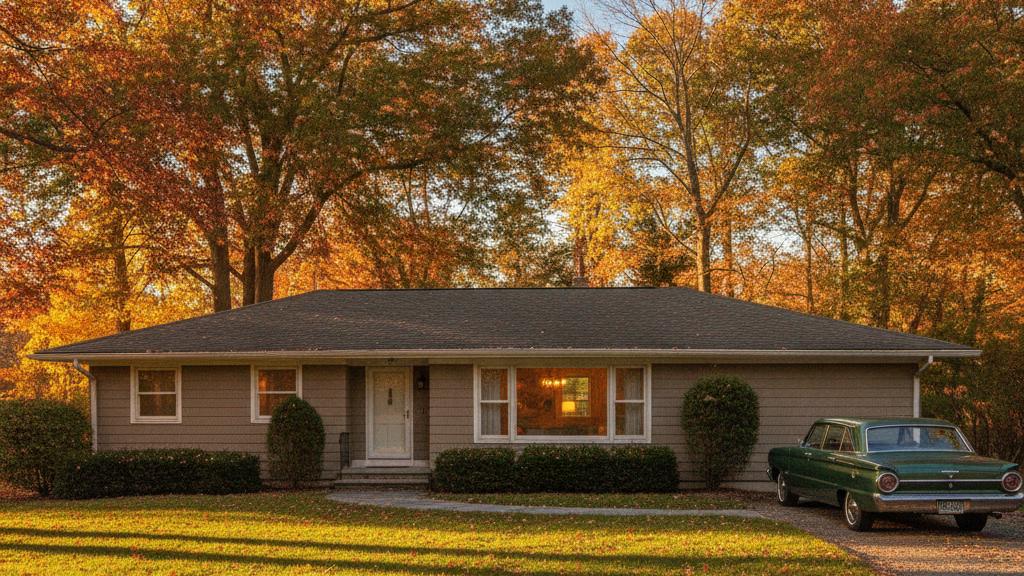
The unincorporated Town of Greenburgh — the larger part that excludes Ardsley, Dobbs Ferry, Elmsford, Hastings, Irvington, and Tarrytown, which have their own village governments — encompasses a broad band of central Westchester that developed heavily in the postwar decades. Hartsdale and Edgemont in particular have substantial concentrations of 1950s and 1960s Ranch homes, split-levels, and raised Ranches built for the commuter market when the Harlem Line was expanding.
That postwar housing stock often includes large fixed picture windows facing the rear yard — sometimes running six to eight feet wide — along with sliding glass patio doors. These elements were a defining aesthetic of midcentury residential design. They are also where triple-pane has a different cost logic than a standard double-hung replacement:
The math on large fixed glass. A large picture window involves significant labor to frame, flash, and seal regardless of whether the glazing unit is double- or triple-pane. When the installation cost is the same either way, the additional cost of the triple-pane glass unit is a smaller share of the total job, and the performance gain — lower U-factor, better condensation resistance on a large cold surface in January — is proportionally more noticeable.
Condensation on large glass spans. Single-pane and aging double-pane picture windows in postwar Ranch homes frequently show winter condensation on the interior glass surface. This is a humidity-and-dew-point issue (the glass surface is cold enough to pull moisture from indoor air), not a window defect per se. Triple-pane units have a higher interior glass surface temperature in cold weather — the second gas space insulates the innermost pane better than a double-pane unit can. Interior-surface condensation is a function of the glass’s interior temperature relative to the dew point of the room air; a lower U-factor (warmer interior pane surface) reduces the probability of condensation. For a six-foot picture window in a Hartsdale Ranch with humid indoor air in January, that matters.
Inland cold, no coastal buffer. Greenburgh is far enough from both the Long Island Sound and the Hudson River that it gets little coastal temperature moderation in winter. The inland ridges around Edgemont and the Sprain Ridge can see sustained cold nights that push the performance advantage of triple-pane’s lower U-factor into more meaningful territory than it would be in a more coastal Westchester town.
Where the real performance lives: gas fills and low-E coatings
Whether a window is double- or triple-pane, the dominant drivers of thermal performance are the fill gas and the low-E coating, not the pane count alone. Per the U.S. Department of Energy’s guidance on window types and technologies:
- Argon fill is denser than air and slows conductive heat transfer across the gas space. It is standard in quality double- and triple-pane units.
- Krypton fill is denser than argon and particularly effective in narrower gaps — triple-pane sashes with thin profiles often use krypton to maintain performance without requiring a thicker frame.
- Low-E coatings reflect long-wave infrared (heat) and are the primary tool for managing both winter heat loss and summer heat gain. A well-specified double-pane unit with a quality low-E coating and argon fill can qualify for ENERGY STAR Northern zone performance.
The marginal thermal improvement of adding a third pane over a high-performance double-pane unit diminishes rapidly. Where triple-pane earns its keep is in the two areas noted above: large, cold glass surfaces where condensation is a real problem, and situations where the incremental cost of upgrading the glazing unit is small relative to the total installation.
When reviewing any window quote, look at the NFRC label for the whole-unit U-factor — not the center-of-glass figure that often appears on manufacturer spec sheets. Per the NFRC, the U-factor scale runs roughly 0.20–1.20; lower is better. New York’s code compliance and ENERGY STAR qualification are both based on NFRC whole-unit ratings.
Permits in Greenburgh
Window replacement is a permitted scope of work in New York. In the unincorporated Town of Greenburgh — the area that encompasses Hartsdale, Edgemont, and most of the residential neighborhoods outside the incorporated villages — the Town of Greenburgh Building Department handles permit applications, per the Town’s published building FAQ. The incorporated villages (Ardsley, Dobbs Ferry, Elmsford, Hastings, Irvington, Tarrytown) maintain their own building programs. Requirements vary by municipality; confirm any specific energy performance requirements with your local building department.
Gunner Roofing pulls the required building permit and manages the application on every window replacement project as part of the job.
What Gunner installs in Greenburgh
Gunner Roofing is an Andersen Certified Elite contractor and installs Andersen windows — including the 400 Series and A-Series — throughout Westchester County and Greenburgh. Gunner is fully licensed, insured, and bonded in New York.
For large picture windows, Andersen’s product lines offer both double- and triple-pane glazing options. Gunner can advise on the right glass package for a given opening based on size, orientation, and the specific condensation or efficiency goals for your home.
For a free, no-obligation estimate on window replacement in Greenburgh, visit GunnerRoofing.com.
Frequently asked questions
Are triple-pane windows worth the extra cost in Greenburgh, NY? For most Greenburgh homes replacing standard double-hung windows, a well-specified double-pane unit with low-E coating and argon fill meets ENERGY STAR Northern zone performance (U-factor ≤ 0.22 per ENERGY STAR v7.0) at lower cost. Triple-pane makes more sense for large fixed picture windows — common in Greenburgh’s postwar Ranch and split-level housing stock — where the installation cost is similar regardless of pane count and the condensation-resistance benefit on big cold glass surfaces is meaningful.
Why does triple-pane show up on Connecticut quotes more often than in Westchester? Connecticut falls in IECC Climate Zone 5 under the 2021 Connecticut State Building Code, while Westchester County is Zone 4 under New York’s 2020 energy code. Zone 5 carries a tighter performance requirement, so CT contractors more routinely specify glass packages that meet the higher bar — including triple-pane as a default rather than an upgrade. If you are comparing quotes from a NY and a CT contractor, the difference in glass specification may simply reflect the different code floors, not necessarily a difference in quality.
What U-factor should I look for when replacing windows in Greenburgh? The 2020 NYS Energy Conservation Construction Code (Table R402.1.2) sets a prescriptive code floor of U-factor 0.32 for Climate Zone 4, which covers Westchester. The more meaningful performance target is ENERGY STAR Version 7.0 Northern zone: U-factor ≤ 0.22 and SHGC ≥ 0.17, in effect since October 23, 2023. Quality double-pane units with low-E and argon fill routinely reach this level. Always confirm the NFRC-certified whole-unit U-factor on the label.
My Ranch home has a large picture window that fogs up every winter. Will triple-pane fix it? Fogging on the interior surface of a window is a condensation problem driven by the difference between the glass temperature and the dew point of your indoor air. A lower U-factor (better-insulating glass) keeps the interior pane surface warmer, which reduces the risk of condensation. Triple-pane, with its lower U-factor, does help with this on large cold glass spans. But if the fogging is between the panes — inside the sealed unit — that is an IGU seal failure and needs replacement regardless of pane count.
Do I need a permit for window replacement in Greenburgh? Yes, window replacement is a permitted scope of work. In the unincorporated Town of Greenburgh, permit applications go through the Town of Greenburgh Building Department. If your home is in one of Greenburgh’s incorporated villages (Ardsley, Dobbs Ferry, Elmsford, Hastings, Irvington, Tarrytown), that village handles its own building permits. Gunner Roofing pulls and manages the permit application on every project.
What is the difference between NFRC U-factor and center-of-glass U-factor? The NFRC whole-unit U-factor — what appears on the label — measures heat loss for the entire window assembly, including the frame. Center-of-glass U-factor measures only the glazing itself and is typically lower (better-looking) because frames insulate less well than the glass center. New York’s energy code and ENERGY STAR qualification are both based on NFRC whole-unit U-factors. When comparing windows, use label values — per the NFRC, the scale runs roughly 0.20–1.20, with lower being better.
Get a fast, free quote
No inspection visit needed - we measure your roof from satellite imagery and send your quote.