Coastal vs. inland: why location drives roof lifespan in NY & CT
Two identical roofs, installed the same year — one on a home along Long Island Sound, one a few towns inland — often age on completely different timelines. Across the Gunner Roofing service area in New York and Connecticut, where a home sits is one of the biggest variables in how long its roof lasts: coastal homes fight salt air and sustained wind, while inland homes face deeper cold, heavier snow, and more aggressive freeze-thaw cycling. This guide breaks down how roof lifespan shifts between the shoreline and inland areas of Westchester and Fairfield Counties — and what to do about it.
As a baseline, most asphalt shingle roofs in the region are realistically replaced between 15 and 25 years (metal 35–60, slate 50+), shorter than manufacturer ideal-condition ratings because of the Northeast’s climate. But that range swings within the service area depending on coastal exposure, tree cover, and elevation — which is what the sections below get into.
Roof lifespan by material — rated vs. typical NY & CT
The “rated” column below reflects ideal-condition figures from InterNACHI’s standard life-expectancy chart. The “typical NY & CT” column is the real-world replacement range Gunner Roofing sees across Westchester County, NY and Fairfield County, CT — roughly 20–25% shorter than the ideal-condition midpoint.
| Roofing material | Rated life, ideal conditions (years) | Typical NY & CT service life (years) |
|---|---|---|
| Asphalt shingles (3-tab) | 20 | 12–17 |
| Asphalt shingles (architectural) | 30 | 18–25 |
| Wood shakes/shingles | 25 | 15–20 |
| EPDM rubber (low-slope) | 15–25 | 12–18 |
| Metal (standing seam) | 40–80 | 35–60 |
| Copper | 70+ | 60+ |
| Synthetic slate/shake | 40–50 | 30–45 |
| Natural slate | 60–150 | 50–100+ |
| Clay or concrete tile | 100+ | 75–100+ |
Architectural asphalt shingles are the most common choice across both states — they balance upfront cost, appearance, and durability for most New England housing styles. Metal and slate cost more but can outlast two or three shingle roofs. Note: manufacturer warranty terms are fixed figures quoted exactly from source documentation; the “typical NY & CT” column is the real-world replacement estimate and does not shorten any warranty.
What the Northeast climate does to roofs in NY and CT
The Gunner service area sits in a cold, wet, four-season climate that hits roofs from multiple directions.
Freeze-thaw cycles. Water works into small cracks in shingles and flashing, freezes, expands, and widens those cracks over the course of winter. The lower Hudson Valley and coastal Connecticut average dozens of freeze-thaw transitions per year — more than enough to degrade standard asphalt shingles ahead of schedule.
Ice dams. When attic heat warms the underside of snow and melts it, the meltwater runs to the cold eave and refreezes, building an ice ridge that backs water up under the shingles and into the roof decking. Ice dams are one of the leading causes of premature roof leaks across Westchester and Fairfield Counties — and they’re largely preventable with correct attic ventilation and insulation.
Heavy snow and wind. Nor’easters bring significant snow loads and wind gusts across the entire service area. A poorly attached or aging shingle that might survive another decade in a mild climate often fails after a hard winter in this region.
Coastal salt air and wind. Communities along Long Island Sound — from Rye, Mamaroneck, and Larchmont in Westchester to Greenwich, Norwalk, Westport, and Bridgeport along the Connecticut shoreline — see persistent salt air that corrodes unprotected flashing and fasteners, and higher sustained winds that stress the edges and ridge of the roof.
How location within NY & CT affects roof lifespan
Not all homes in the service area age the same way. Microclimates within Westchester and Fairfield Counties create meaningfully different conditions.
Westchester County shoreline (Rye, Mamaroneck, Larchmont). The Long Island Sound exposure brings salt-air corrosion and higher wind speeds. Flashing failures appear earlier on these homes than on identical-age roofs inland — corrosion-resistant flashing specs and annual inspections are especially important here.
Inland Westchester (Scarsdale, Greenburgh, White Plains, Yonkers). Heavy tree cover means persistent debris accumulation, moisture retention, and a higher risk of moss and lichen growth that holds water against the surface. Dense canopy also increases storm-damage exposure from falling limbs during Nor’easters.
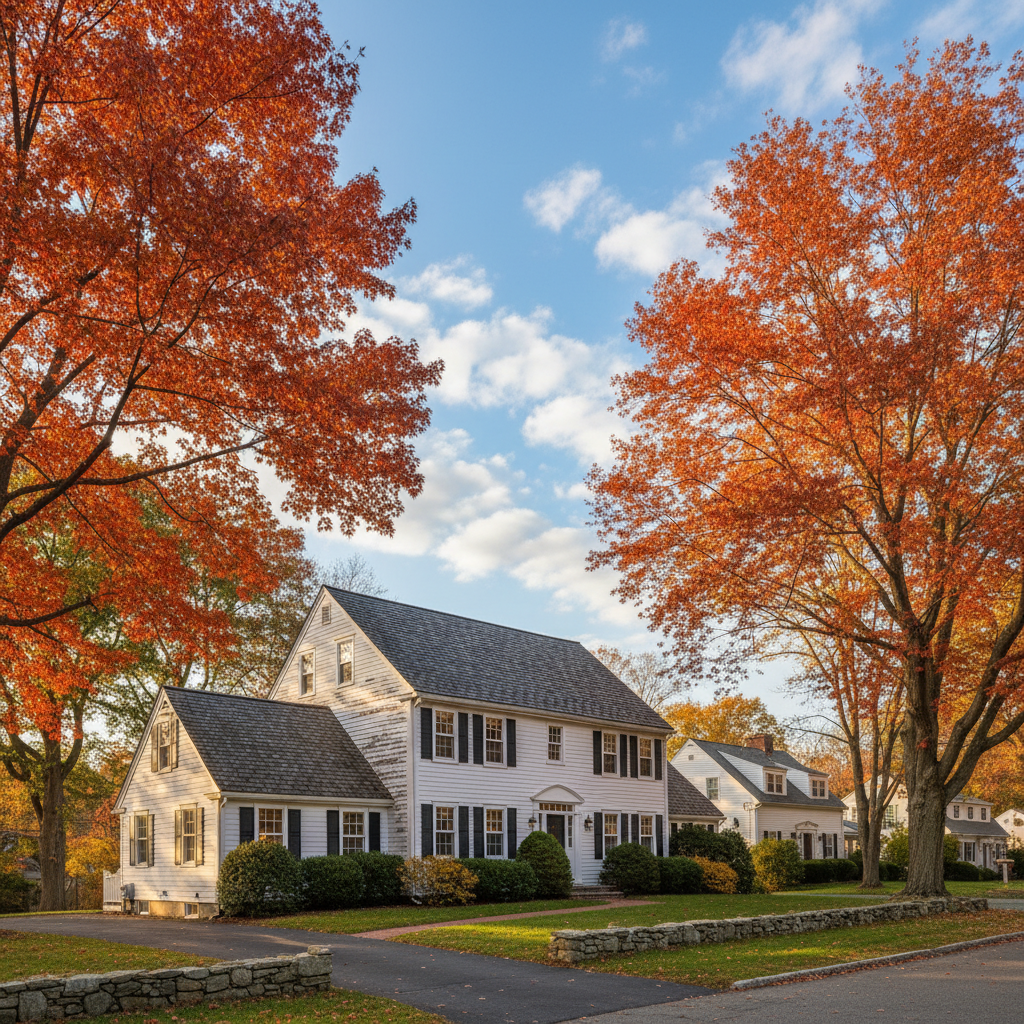
Fairfield County shoreline (Greenwich, Stamford, Norwalk, Westport, Bridgeport). Similar Long Island Sound salt-air and wind exposure as the Westchester coast, with a housing stock that skews toward older Colonials and capes that often carry complex hip-and-valley geometry, multiple penetrations, and aging copper or lead flashing.
Inland Fairfield and Hartford corridor (Danbury, New Milford, Torrington area). Further from the Sound’s moderating influence, this part of the service area sees a more continental climate: deeper cold, higher average snowfall, and more intense freeze-thaw cycling. Ice dam and structural snow-load damage runs higher here than in the coastal towns.
The single biggest controllable factor across all locations is attic ventilation. Balanced intake (soffit vents) and exhaust (ridge vent) keeps the roof deck cooler in summer — slowing shingle aging — and reduces the temperature differential that drives ice dam formation in winter, helping roofs reach the upper end of the NY & CT service-life range.
Signs your roof is near the end of its life
Watch for curling, cupping, or cracked shingles; bald spots where protective granules have worn away (granule grit visible in gutters is an early signal); water stains or daylight visible in the attic; sagging rooflines; recurring ice-dam leaks each winter; and shingles simply approaching their real-world age for the material and location. A roof in its mid-20s showing several of these signs is typically a replacement candidate rather than a repair. A thorough inspection covers the attic — decking condition, ventilation, insulation — as well as the surface; surface-only inspections miss the most common sources of failure in this region.
Frequently asked questions
How long does an asphalt shingle roof last in New York and Connecticut?
Architectural asphalt shingles typically need replacement around 18 to 25 years in the NY & CT region. Three-tab shingles usually fall in the 12 to 17 year range. Both land below the nationally published ideal-condition ratings because of the region’s freeze-thaw winters, ice dams, heavy snow, and coastal storm exposure.
What roofing material lasts the longest in the Northeast?
Natural slate and clay or concrete tile last the longest — often 50 to 100-plus years in this region — followed by metal, which commonly reaches 35 to 60 years. They carry a higher upfront cost but can outlast several asphalt shingle roofs over a home’s lifetime.
How does living near the Connecticut or Westchester coast affect roof lifespan?
Homes along Long Island Sound — in towns like Rye and Mamaroneck in Westchester, or Greenwich, Norwalk, and Westport in Fairfield County — see salt-air corrosion on metal flashing and fasteners, and higher wind loads that stress shingle attachment. These homes tend to see flashing failures and wind-lifted shingles earlier than similar-age inland roofs. Corrosion-resistant flashing specifications and annual inspections help offset this.
Does attic ventilation actually extend how long a roof lasts?
Yes. Balanced soffit-and-ridge ventilation keeps the roof deck cooler in summer, slowing the thermal degradation of asphalt shingles, and reduces the attic-to-exterior temperature differential that produces ice dams in winter. Inadequate ventilation is one of the most common reasons roofs in the Northeast fail well before their rated lifespan.
How do I know if my roof needs repair or full replacement?
Isolated damage — a few missing or cracked shingles — on an otherwise sound, mid-life roof is usually a repair. Widespread granule loss, repeated leaks in multiple areas, visible decking damage, or a roof at or past the real-world age range for its material typically points to replacement. A professional inspection that covers the attic as well as the surface is the reliable way to tell the difference.
Get a fast, free quote
No inspection visit needed - we measure your roof from satellite imagery and send your quote.