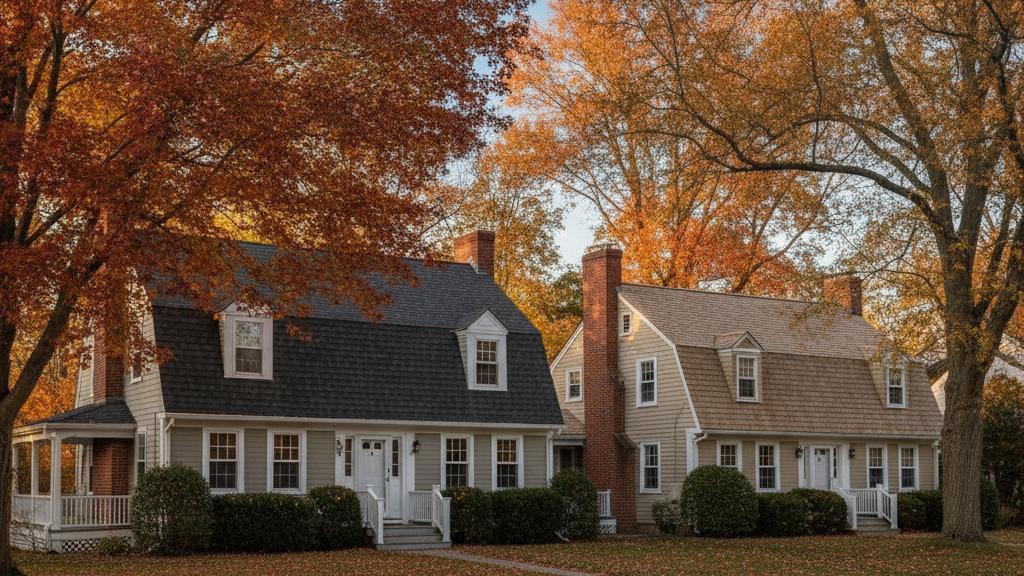
Dark shingles absorb more solar energy than light ones — that part is true. But whether the color of your shingles meaningfully raises the temperature inside your New York or Connecticut home is a more nuanced question, and the answer matters especially now as you plan for a roof replacement before winter sets in. The short version: shingle color is a real factor, but attic ventilation, insulation, and air-sealing are far larger levers on your comfort and energy bills than the color you choose.
Here’s what homeowners in NY and CT should actually know.
How Shingle Color Affects Roof Surface Temperature
A dark-colored shingle absorbs a greater share of solar radiation than a light or medium-tone shingle. The U.S. Department of Energy notes that conventional roofing materials can reach surface temperatures significantly above ambient air temperature on a sunny day, while “cool” roofing materials with high solar reflectance stay closer to ambient temperature (per the DOE Energy Saver resource on energy-efficient roofing). A light-colored or specially coated shingle can reflect more of that heat rather than absorbing it.
The key distinction is surface temperature versus interior temperature. The roof deck and attic air beneath dark shingles will be warmer on a sunny summer day — but how much of that heat reaches your living space depends almost entirely on what’s between that hot deck and your ceiling:
- Attic ventilation — a properly ventilated attic exhausts hot air continuously, so a heat spike on the roof deck doesn’t simply accumulate; it moves through. The U.S. DOE’s guidance on radiant barriers and attic heat makes clear that an air-sealed, well-ventilated attic dramatically reduces heat transfer to conditioned space.
- Insulation — adequate attic floor insulation stops conductive heat from migrating downward into living areas. The insulation level, not the shingle color, is the primary barrier between a hot attic and a comfortable second floor.
- Air sealing — gaps and bypasses around recessed lights, HVAC penetrations, and attic hatches allow hot attic air to bleed directly into living space; closing them typically moves the needle on comfort more than any roofing choice.
Does It Actually Matter in New York and Connecticut?
The NY/CT climate adds important context. This is a temperate Zone 4–5 region: summers are warm but not relentlessly hot, and the driving energy concern for most homeowners is heating season, not cooling season. In Phoenix or Dallas, peak cooling demand is severe and sustained enough that roof solar reflectance becomes a meaningful efficiency variable. In Westchester County or Fairfield County, the cooling season is shorter and the heating season is long — so a “cool roof” that reflects summer sun also loses more heat to the winter sky overnight.
The U.S. DOE’s energy-efficient roofing guidance acknowledges this directly: in cold climates, the energy penalty of a reflective roof during winter heating can offset the summer cooling savings. In northern climates like ours, the net benefit of a highly reflective shingle is modest and sometimes near zero compared with warmer regions.
This doesn’t mean dark shingles are always the right call — it means shingle color is one of many factors and rarely the decisive one for a NY or CT homeowner.
Shingle Color Comparison: What to Expect
| Factor | Dark shingles (charcoal, black, dark brown) | Light shingles (weathered wood, light gray, beige) |
|---|---|---|
| Roof surface temp on a hot day | Higher | Lower |
| Attic air temp delta | Modest — depends heavily on ventilation | Modest improvement |
| Impact on interior comfort | Minimal if ventilation/insulation are adequate | Minimal if ventilation/insulation are adequate |
| Winter heat retention | Slight advantage (absorbs solar gain on cold days) | Slight disadvantage |
| Algae resistance (NY/CT climate) | No inherent advantage | No inherent advantage |
| Curb appeal / style match | Stronger match for dark-trim, contemporary, or Craftsman homes | Stronger match for traditional Colonials, capes, lighter palettes |
The table makes the trade-off visible: neither choice delivers dramatic, measurable energy savings in this climate if the underlying attic system is well-built. Color is ultimately a style and preference decision for most NY/CT homeowners.
What Actually Moves the Needle on Summer Heat
If your second floor is uncomfortably hot in summer, shingle color is rarely the culprit. The more likely causes — and fixes — are:
1. Inadequate attic ventilation. Hot attic air needs an exhaust path (ridge vent) balanced by intake (soffit vents). A blocked soffit or inadequate ridge creates a heat trap regardless of shingle color. On every Gunner roof replacement, we address attic ventilation as part of the system — not as an afterthought.
2. Thin or settled attic insulation. Over time, blown-in insulation settles and loses effective R-value. Adding insulation to the attic floor is typically one of the highest-return energy improvements available.
3. Air bypasses and unsealed penetrations. Gaps around can lights, plumbing vents, HVAC ducts, and attic hatches move conditioned air out and hot attic air in. Gunner addresses air sealing, insulation, and ventilation together on roof replacements — the whole thermal stack, not just the shingle layer.
4. Radiant heat from the roof deck. Even with good insulation, the roof deck radiates heat downward. A radiant barrier — a reflective foil stapled to the rafters or the underside of the deck — reduces this effect regardless of shingle color. For homes in this region where summer heat is a complaint, a radiant barrier is often worth considering; the DOE’s guidance on radiant barriers describes the mechanism clearly.
What GAF Timberline Shingles Offer — and What They Don’t
Gunner installs GAF Timberline HDZ® and UHDZ® shingles on the majority of our re-roof projects in NY and CT. These shingles are available across a wide color palette from dark charcoals to lighter sand and weathered-wood tones.
What they don’t advertise, and what most homeowners aren’t told: the color choice within the Timberline line makes a small difference in thermal performance. What matters far more is the LayerLock™ nailing technology, the full GAF system (starter strip, ridge cap, deck protection, and proper ventilation) that together make the installation wind-resistant and durable — and the attic work underneath.
GAF does offer StainGuard Plus® algae-resistant technology across its shingle line. In the NY/CT climate, where roof algae (the black streaks you see on older roofs) is a real concern driven by humidity and shade rather than heat, this feature is worth selecting regardless of which color you choose.
The Honest Bottom Line for NY and CT Homeowners
If you’re replacing your roof this fall and wondering whether to go lighter on shingle color to save on cooling bills: the energy savings in this climate are modest at best and may be offset in winter. Pick the color that works for your home’s architecture and your personal preference — and invest the conversation with your contractor in attic ventilation, insulation depth, and air sealing. That’s where the real return on comfort and energy efficiency lives in New York and Connecticut.
If your upstairs is running hot, the roof is a reasonable place to start the investigation — but the fix usually lives underneath the shingles, not in which color you chose.
Get a free, no-obligation estimate at GunnerRoofing.com — including a look at how your attic system is working.
Frequently Asked Questions
Do dark shingles make your house significantly hotter inside? In most cases, no — not significantly. While dark shingles do absorb more solar energy and raise roof surface temperature, the impact on interior living-space temperatures is small when attic ventilation and insulation are adequate. Attic air sealing and insulation levels have a far greater effect on indoor comfort than shingle color.
Are light-colored shingles more energy-efficient in New York and Connecticut? Modestly, in summer — but the advantage is smaller in NY/CT than in warmer climates. A lighter or “cool” shingle reflects more summer solar gain, but in cold-climate Zone 4–5 it may also lose more heat on winter nights, partially or fully offsetting the summer benefit. The U.S. DOE notes this trade-off for northern climates.
What shingle colors does Gunner install in NY and CT? Gunner installs GAF Timberline HDZ® and UHDZ® shingles in a range of colors from deep charcoals to lighter weathered-wood and sand tones. The right choice depends on your home’s architecture, trim color, and neighborhood — not primarily on thermal performance, which is relatively similar across the line.
What’s more important than shingle color for keeping my home cool in summer? Attic ventilation (balanced ridge and soffit venting), attic floor insulation, and air sealing around penetrations. A properly ventilated, insulated, and air-sealed attic reduces heat transfer to living space far more effectively than a light-colored shingle.
Does shingle color affect algae growth on the roof? No — algae growth in NY/CT is driven by humidity, shade, and airborne spores, not roof color. What matters is whether your shingles include an algae-resistant technology like GAF StainGuard Plus®, which is available across colors and uses copper-based granules to inhibit growth over time.
When is a good time to replace a roof in New York or Connecticut? Fall is one of the best windows for roof replacement in NY/CT — before freeze-thaw cycles begin in earnest. Shingle adhesive strips set properly in moderate temperatures, and replacing before winter means the new system is in place for ice-and-water season. If your roof is showing wear, addressing it now rather than waiting is the prudent call.
Get a fast, free quote
No inspection visit needed - we measure your roof from satellite imagery and send your quote.