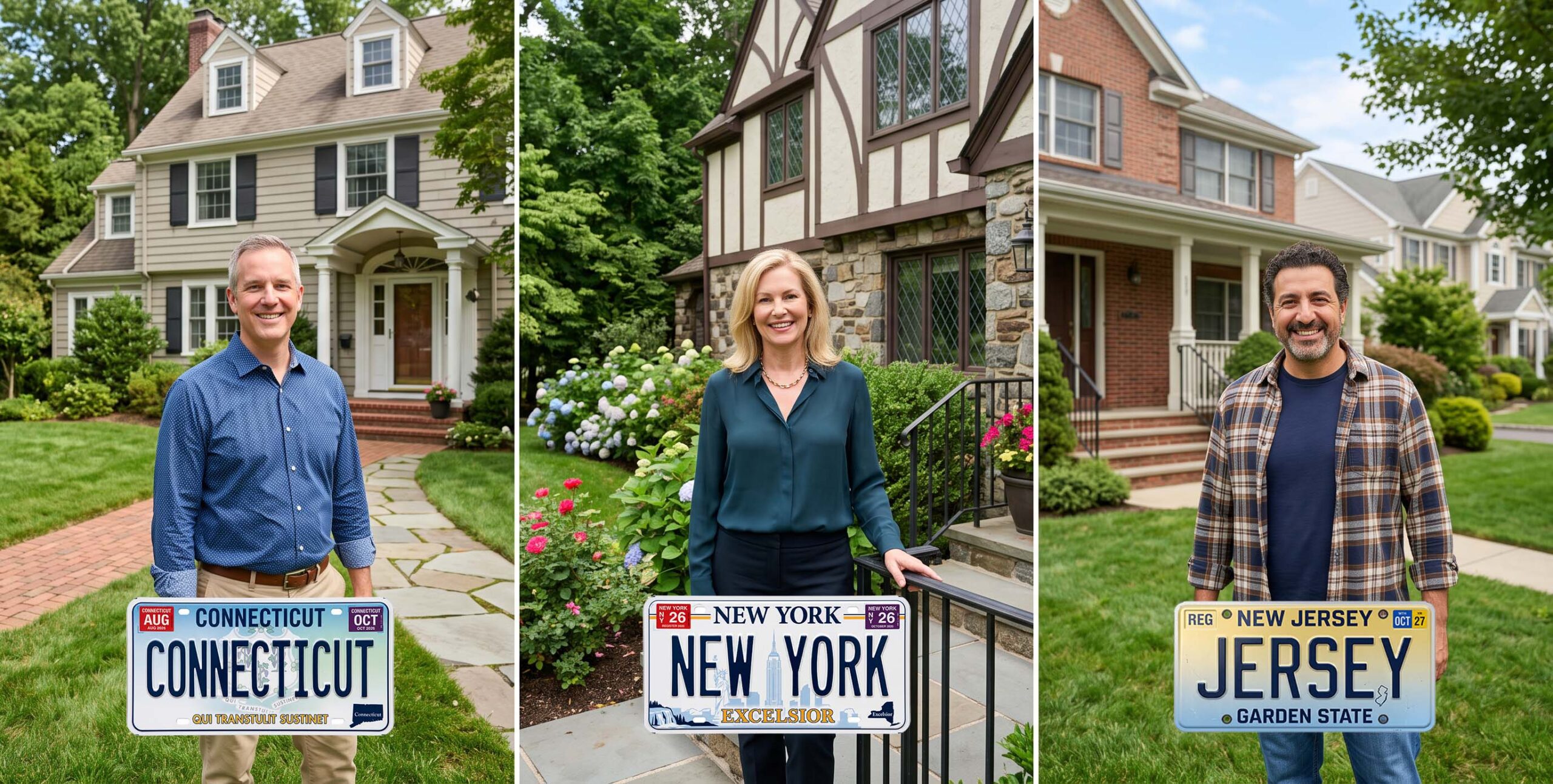
A new roof can improve your homeowners insurance picture — but it is not an automatic discount. The actual benefit depends on three things: your carrier’s rating model, the policy type you currently hold (replacement cost vs. actual cash value), and the quality of the installation and materials. In New York, Connecticut, and New Jersey, where housing stock runs older and storm exposure is real, understanding those three levers is how you get the most value out of a reroofing project.
Here is what to know before and after your project.
The Three Ways a New Roof Affects Your Insurance
1. It restores replacement-cost coverage
This is often the biggest financial gain — bigger, for many homeowners, than any premium reduction. Homeowners insurance policies settle roof claims one of two ways:
| Settlement type | What you receive on a claim |
|---|---|
| Replacement cost value (RCV) | Cost to replace the damaged roof with comparable new materials, minus your deductible |
| Actual cash value (ACV) | Replacement cost minus depreciation — an aging roof may yield only a fraction of what replacement actually costs |
As roofs age past the midpoint of their expected service life, many carriers move coverage to ACV settlement or add a separate roof-specific deductible for wind and hail claims. A new roof resets the depreciation clock and typically restores full RCV eligibility. Confirm the specific terms with your carrier in writing after your project is complete.
2. It removes an insurability flag at renewal
An aging, deteriorating roof is a liability signal to any underwriter — and across NY, CT, and NJ, where carriers have sharpened scrutiny following repeated storm seasons, the consequences of that signal are concrete: higher premiums, coverage restrictions, or non-renewal notices. A properly permitted replacement — backed by a code-inspection record — removes that signal cleanly.
3. Certain material upgrades may qualify for premium credits
Some carriers offer credits for impact-resistant shingles rated Class 3 or Class 4 per UL 2218, for metal roofing, or for homes enrolled in programs like the IBHS FORTIFIED Home standard. Credit availability and amount vary by insurer and are not standardized across carriers in any of these states — ask your specific carrier directly before selecting materials. Even where no explicit credit exists, a storm-resistant installation creates a documented claims history with fewer losses, which has long-term policy-cost implications.
NY, CT & NJ: How the Market Differs
New York, Connecticut, and New Jersey each regulate homeowners insurance through their own state department — the New York Department of Financial Services (NY DFS), the Connecticut Insurance Department (CT CID), and the New Jersey Department of Banking and Insurance (NJ DOBI). None of the three sets a universal rule about when a roof triggers ACV settlement or what credits carriers must offer; underwriting criteria remain carrier-specific.
That said, homeowners in each state encounter different practical dynamics:
New York (Westchester County and surrounding area)
Westchester’s housing stock skews older. Roofs on this housing stock are regularly approaching or exceeding the typical service life for standard asphalt shingles, and carriers writing in Westchester are well aware of that profile. For a homeowner with a 20-plus-year roof on a mid-century Colonial, the insurance conversation is urgent: not just about premium savings, but about whether RCV coverage is still in force at all.
Connecticut (Fairfield County, Hartford County, and statewide)
Connecticut properties face a dual exposure: coastal communities along Long Island Sound see elevated wind and tropical-storm risk during Atlantic hurricane season (June through November), while inland areas contend with the freeze-thaw cycles and Nor’easters that accelerate granule loss and general shingle wear. Fairfield County’s shoreline towns sit in a higher wind-exposure tier and face closer carrier scrutiny on roof age and condition at renewal. Hartford County and interior CT communities see the inland climate pattern more acutely. A new roof in either environment produces a clean, current installation record — which is what underwriters want to see regardless of coastal proximity.
New Jersey (northern and shore counties)
New Jersey homeowners see the same split. Northern NJ carries the freeze-thaw and Nor’easter wear that ages inland roofs across the region, while shore and southern counties sit in higher coastal wind-exposure tiers during Atlantic hurricane season. As in New York and Connecticut, NJ DOBI does not mandate roof-specific credits or settlement rules — whether a new roof lowers your premium, restores RCV coverage, or earns an impact-resistance credit comes down to your individual carrier. A current, properly permitted installation is what underwriters want to see.
Material Choices That Insurers Notice
Architectural asphalt shingles
GAF Timberline HDZ® and UHDZ® — the shingles Gunner Roofing leads with — represent a meaningful upgrade from standard three-tab in both performance and wind resistance. Gunner installs the full GAF WindProven®-qualifying assembly: GAF LayerLock™ shingles fastened at four nails, starter strips at eaves and rakes, qualifying ridge cap shingles, roof deck protection, and a leak barrier or qualifying attic ventilation product. That complete system is what qualifies the installation for GAF WindProven® (with no maximum wind-speed limitation) and enhanced warranty eligibility. It is also the documented assembly record that matters to an insurer reviewing a claim file.
Impact-resistant shingles (Class 3 and Class 4, UL 2218)
Class 4 shingles are rated for resistance to 2-inch steel-ball impact per UL 2218. Some carriers offer discounts specifically for Class 4 installations — ask your carrier whether they participate, and get any quoted credit in writing before you commit to a shingle spec.
Metal, synthetic slate, and composite tile
These materials carry longer expected service lives than standard asphalt and typically perform better under high-wind and hail loading. Some carriers reflect that durability profile in their underwriting terms. Brava Roof Tile and DaVinci Roofscapes synthetic slate are two lines Gunner installs; both are premium synthetic options worth discussing with your carrier when you are selecting materials.
Why the Installation Quality — and the Permit — Matter
An insurer reviewing a claim will look at more than just the age of the roof. They will look at whether it was properly installed, to code, by a contractor with a documented record.
Gunner is a GAF Master Elite® 3-Star President’s Club contractor — a designation held by fewer than 3% of roofing contractors nationally. On every project, Gunner pulls and manages the building permit, producing an official, code-inspected installation record. That permit and inspection approval are the documentation an insurer wants when you report a reroofing project.
Gunner’s standard roof replacement includes ice-and-water shield meeting or exceeding code minimums, leak barrier through all valleys, step and counter-flashing at all penetrations (dormers, chimneys, skylights, wall terminations), and verified attic ventilation. Gunner also addresses all three layers of the building envelope on roof replacements — air sealing, insulation, and ventilation — performing that work directly.
An unpermitted replacement leaves you with no official installation record. In a claim scenario, that gap can complicate or delay settlement and, depending on policy language, may affect coverage eligibility.
Five Questions to Ask Your Insurer Before and After Reroofing
- Does my current policy settle roof claims at RCV or ACV? If ACV — or if there’s a separate roof deductible for wind and hail — ask whether a new roof would restore full RCV terms.
- Do you offer any credits for impact-resistant (Class 3 or Class 4 UL 2218) shingles or specific roofing materials? Confirm the credit amount, any documentation required, and whether it applies at renewal or only at policy issue.
- What documentation do you need after the project to update my policy record? Typically: the contractor’s permit, the final inspection sign-off, and a materials specification sheet.
- Does my policy include a separate wind or hail deductible on the roof? A new roof may not automatically eliminate a percentage-based storm deductible — the policy language governs.
- Will the new roof affect my renewal terms or my eligibility for replacement-cost coverage? Ask for written confirmation so there is no ambiguity at your next renewal date.
FAQ
Q: Does a new roof automatically lower my homeowners insurance premium in NY or CT?
A: Not automatically. The most common benefit is restoring replacement-cost (RCV) coverage if your old roof was being settled at depreciated value — which can represent thousands of dollars in a claim scenario. Premium reductions are carrier-dependent and not guaranteed; impact-resistant material credits vary widely. Check with your carrier directly after your project is complete.
Q: How old does a roof have to be before insurance treats it as a problem?
A: There is no universal threshold in New York or Connecticut state law — each carrier sets its own age thresholds and underwriting criteria. In practice, roofs past the midpoint of their expected service life often trigger ACV settlement language or trigger an inspection requirement before renewal. Ask your carrier what their current criteria are before scheduling a reroofing project, so you understand the full coverage context.
Q: What is UL 2218 Class 4, and does it matter for insurance in NY and CT?
A: UL 2218 is the standard test method for impact resistance of roofing materials. Class 4 is the highest rating, achieved by withstanding a 2-inch steel-ball drop at 20 feet without cracking or breaking through. Some carriers offer premium credits for Class 4 roofs; others do not. Credit availability is not mandated by NY DFS, the CT Insurance Department, or NJ DOBI, and varies by carrier.
Q: Does it matter whether my contractor pulled a permit?
A: Yes. A pulled permit creates an official record that the installation was inspected and approved to code — which is the documentation an insurer wants when you report a reroofing. An unpermitted replacement leaves a documentation gap that can complicate a claim. Gunner pulls and manages the permit on every project.
Q: What is the difference between RCV and ACV for a roof claim?
A: Replacement cost value (RCV) pays what it costs to replace your damaged roof with comparable new materials, minus your deductible. Actual cash value (ACV) deducts depreciation first — so a 20-year-old roof on an ACV policy may yield a settlement covering only a fraction of what replacement actually costs. A new roof typically resets the depreciation calculation and restores RCV eligibility, but confirm the specific terms with your carrier.
Ready for a free quote? Visit GunnerRoofing.com for a no-obligation estimate — Gunner serves homeowners across Westchester County, NY and Fairfield County, CT.
Get a fast, free quote
No inspection visit needed - we measure your roof from satellite imagery and send your quote.