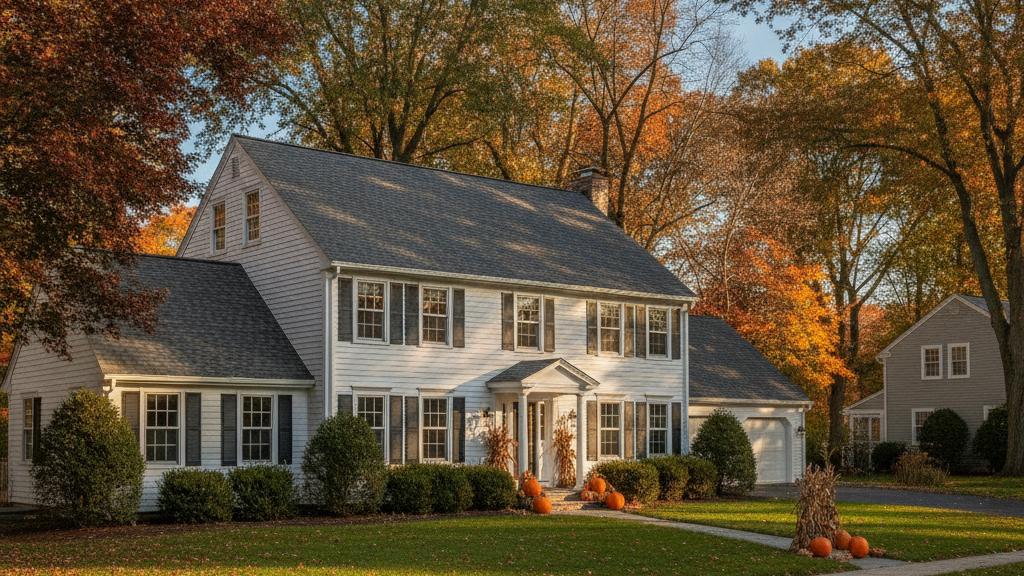
The short answer: the roof itself — every shingle, layer of underlayment, and piece of step flashing — transfers with the house as real property the moment the deed is signed. The warranty is a separate document with its own rules, and whether it follows the sale depends on which coverage tier was purchased and what transfer steps were taken. Here’s what sellers and buyers in New York and Connecticut need to understand before closing this fall.
| Warranty Type | Workmanship Coverage | Transferable? |
|---|---|---|
| GAF Golden Pledge® | 25 years | Yes — transferable (see gaf.com/warranties for process) |
| GAF Silver Pledge™ | 10 years | Yes — transferable (see gaf.com/warranties for process) |
| Base manufacturer limited warranty | Product coverage only (no workmanship) | Varies by tier; confirm with GAF |
| Contractor workmanship-only warranty | Typically shorter term | Typically non-transferable |
Sources: GAF warranty documentation at gaf.com/warranties. Specific transfer procedures and any applicable fees are governed by the current warranty document — confirm terms before closing.
The Roof Is Part of the House — It Transfers Automatically
When a contractor replaces your roof, the new system becomes a fixture — legally attached to the real property, not personal property. That means when you sign the deed, the new roof transfers to the buyer without any paperwork on your part. The buyer inherits the physical installation, including the shingles, underlayment, ice-and-water shield, valley flashing, ridge cap, and attic ventilation work, just as they inherit the foundation and framing.
This is true whether the work was done last month or three years ago. The buyer doesn’t receive a separate bill of sale for the roof; it’s part of what they’re buying.
The Warranty Is a Separate Story
Warranties are contracts, and contracts have transfer rules. The roofing warranty was issued to you, the owner at the time of installation — it doesn’t automatically become the buyer’s property.
There are typically two types of coverage on a replaced roof:
Manufacturer material warranty — covers defects in the shingle or product itself. Higher-tier manufacturer warranties from GAF are explicitly transferable, subject to a formal process. Lower tiers may transfer automatically or may not transfer at all; you have to read the document.
Contractor workmanship warranty — covers installation errors (improper nailing, flashing mistakes, etc.). These are contracts between you and your specific contractor. Contractor workmanship warranties may not be assignable to a new owner.
The practical upshot: if a buyer finds a nail-popped shingle two years after closing, whether they can make a warranty claim depends entirely on what was purchased and transferred.
GAF Golden Pledge® and Silver Pledge™: Both Are Transferable
For homes in New York and Connecticut where Gunner Roofing completed a GAF roof replacement, the enhanced warranty options available are the GAF Golden Pledge® and GAF Silver Pledge™. Per GAF’s warranty documentation, both are transferable. The Golden Pledge carries 25-year workmanship coverage; the Silver Pledge carries 10-year workmanship coverage.
These enhanced tiers are only available through GAF Master Elite® contractors — fewer than 3% of roofing contractors nationally qualify. Gunner is a GAF Master Elite® 3-Star President’s Club contractor. If Gunner installed your GAF roof and you opted into Golden Pledge or Silver Pledge coverage, that warranty can follow the house to the next owner.
Important: transferability does not happen automatically. Both Pledge warranties require a formal transfer process initiated through GAF. Don’t assume the coverage transfers by itself; initiate the process before or promptly after closing. Current procedures, timelines, and any applicable fees are governed by the warranty document at gaf.com/warranties — confirm those terms before closing.
The Permit Record — More Important Than It Sounds
In New York, building permits for roof replacements are required. New York’s Uniform Fire Prevention and Building Code assigns each local municipality the responsibility to administer and enforce permit requirements within its jurisdiction (per the NYS Dept. of State, Executive Law §381). Requirements vary by municipality; confirm with your local building department or historic-district commission.
An unpermitted roof replacement is a code violation — and it can surface at the worst possible time: during a buyer’s home inspection or title search. An open or missing permit can become a negotiating point, delay a closing, or require remediation at your expense as the seller.
Gunner handles the permit on every project, in every case. We pull and manage the permit application as a standard part of every roof replacement. When you sell a home where Gunner did the roof, you should be able to hand the buyer a closed permit — a certificate of completion showing the work was inspected and signed off by the local building department.
If you used a contractor who did not pull a permit, consult a real estate attorney before listing. Addressing it proactively is almost always better than having it surface at inspection.
The Four Documents to Have Ready
Before listing — or before closing as a buyer — the following documents should be on hand for any recent roof replacement:
1. Permit certificate of completion. The record that the permit was opened and officially closed after inspection. Obtainable from your local building department if you’ve misplaced it.
2. Manufacturer warranty certificate. The issued warranty document, showing the coverage tier, issue date, and current owner’s name. This is what you present to GAF when initiating a transfer.
3. Contractor invoice and scope of work. Documents what was replaced, what materials were installed, and who performed the work. Useful for insurance carriers and buyers who want to verify the installation scope.
4. Product specification sheets. Product data sheets may document shingle class and wind rating — some homeowners insurance carriers offer programs for qualifying impact-resistant or high-wind products; confirm with your carrier.
Buyers receiving these documents should confirm: (a) the permit is closed, not just issued — an open permit means the inspection never happened, and the new owner could inherit that obligation; (b) the warranty expiration date and any transfer deadlines; and (c) the process for transferring the warranty into their name after closing.
A New Roof Is a Fall Market Advantage — If the Paperwork Is There
Autumn is a real listing season in Westchester and Fairfield counties. Sellers who replaced roofs over the summer often time the house to market this fall, and a documented new roof with a transferable enhanced warranty and a closed permit is a concrete selling point.
The question in a buyer’s mind at inspection is always: when does this need to be replaced, and what will it cost? A new roof with a 25-year workmanship warranty and clean permit history answers both questions. It turns an inspection anxiety into a selling feature.
The paperwork above takes an afternoon to assemble. For sellers: do it before the listing goes live. For buyers: ask for it at the offer stage, not at the closing table.
Frequently Asked Questions
Q: Does a new roof automatically transfer to the buyer when I sell my house? Yes. The physical roof transfers with the house as real property the moment the deed is signed. No separate paperwork is needed for the installation itself to convey.
Q: Do roofing warranties transfer with the house in NY and CT? It depends on the warranty tier. Enhanced manufacturer warranties like GAF Golden Pledge® and Silver Pledge™ are transferable, subject to a formal process through GAF. Base warranties and contractor workmanship-only warranties have more limited transfer terms. Confirm current procedures at gaf.com/warranties before closing.
Q: What documents should a home seller prepare for a recent roof replacement? Gather four things: the permit certificate of completion, the manufacturer warranty certificate, the contractor invoice and scope of work, and the product spec sheets. These eliminate the most common buyer questions at inspection.
Q: What happens if the previous owner replaced the roof without a permit in New York? An unpermitted replacement can surface during a title search or home inspection. In New York, roof work requires a permit administered at the local level. Consult a real estate attorney before listing if you discover this — proactive remediation is better than a closing-table surprise.
Q: Why does a closed building permit matter to a buyer? A closed permit confirms the work was inspected and met code. An open or missing permit means the inspection never happened, and the new owner could inherit the obligation to correct it. Always verify a permit is fully closed, not just issued.
Ready to replace your roof before listing — or want a documented installation you can hand to a buyer with confidence? Get a free, no-obligation estimate at GunnerRoofing.com.
Get a fast, free quote
No inspection visit needed - we measure your roof from satellite imagery and send your quote.