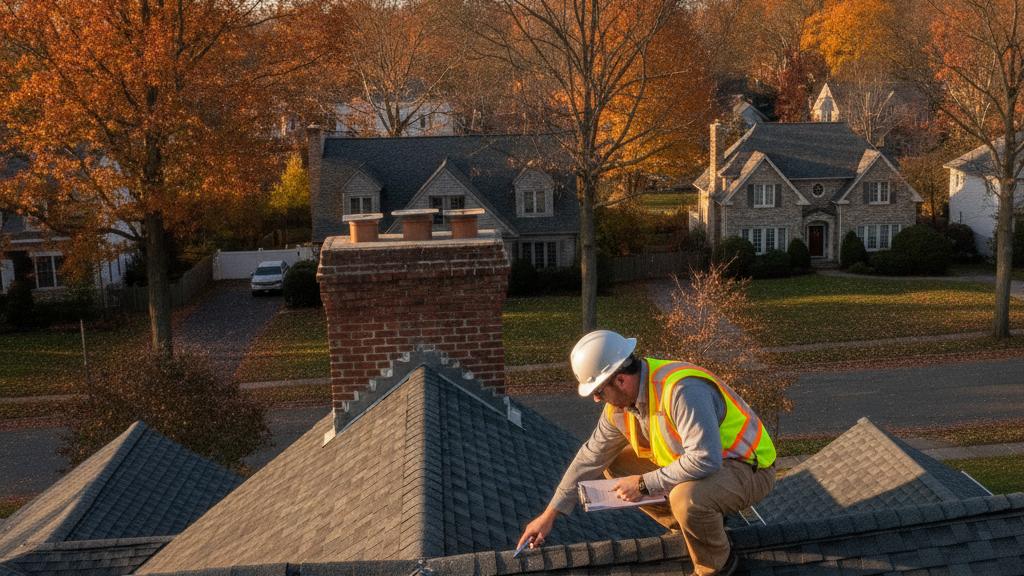
Whether your carrier pays for a full roof replacement — or just a patch — comes down to two things: what caused the damage, and how your policy is written. In New York and Connecticut, a covered peril (typically wind, hail, a falling tree, or fire) generally makes you eligible for a claim. But eligibility is only the first gate. After that, the settlement you receive depends on whether your policy pays actual cash value (ACV) or replacement cost value (RCV), how old your roof is, and what an adjuster physically finds on inspection day.
This post walks through both sides — what adjusters actually evaluate, and how to document and present your claim so nothing gets missed.
ACV vs. RCV: the settlement difference that matters most
Most homeowners don’t read the roof-coverage section of their policy until they need to file a claim. By then, the distinction between ACV and RCV is a significant dollar figure.
| Settlement type | How it works | Real-world impact |
|---|---|---|
| Replacement Cost Value (RCV) | Carrier pays the full cost to replace with comparable new materials, minus your deductible | Most favorable; you’re made whole after paying your deductible |
| Actual Cash Value (ACV) | Carrier pays RCV minus depreciation based on age and condition | The older the roof, the larger the gap between the check and the real cost |
| Recoverable depreciation | Some RCV policies hold back depreciation until the work is done, then release it | You may receive a smaller initial check and a supplement after the job is complete |
ACV policies are common in the NY and CT market, particularly on older homes. Before storm season — which in the Northeast means right now, with fall Nor’easters through early winter — is a good time to confirm which type you carry. Contact your agent or check the declarations page; the NY Department of Financial Services and CT Insurance Department both publish consumer guides that explain these terms (see sources).
What adjusters actually look at
When an adjuster climbs your roof, they’re looking for two things: evidence of a covered peril (the cause) and the scope of damage that event caused. Here’s what the inspection typically covers:
Field shingles
Adjusters check for hail strikes, which leave circular bruise marks or dings in the asphalt granules. Wind damage shows as cracked, curled, or lifted shingles — often along rakes and ridges where uplift forces concentrate. They also note pre-existing granule loss, algae staining, or general weathering that predates the event, because carriers can — and often do — separate storm damage from normal wear.
Ridge caps and hips
Ridge caps receive the most wind uplift and are among the first areas to show damage. Adjusters note whether cap shingles are intact, cracked, or missing, and whether the damage pattern is consistent with a storm event versus gradual deterioration.
Valleys
Valleys channel water volume and are a common point of failure under storm conditions. Adjusters check for granule loss, exposed underlayment, or lifted valley flashing.
Flashing — chimneys, dormers, skylights, wall terminations
Metal flashing is inspected for physical deformation, lifting, or separation from the surrounding roof plane. Rust or failed sealant from years of freeze-thaw cycling looks different from storm-induced displacement, and adjusters are trained to distinguish them.
Gutters and downspouts
Dented or granule-filled gutters are one of the clearest indicators of hail impact. Adjusters typically photograph gutter dents as corroborating evidence even when the shingles show subtle damage.
Penetrations (vents, exhaust pipes)
Soft metal flanges on vents dent easily under hail — adjusters use them as a secondary confirmation when shingle damage is borderline.
The documentation you should have ready
Your adjuster’s report determines the scope of the claim. The more you can contribute to an accurate picture, the better. Before — or immediately after — a significant storm:
Before the claim: – Know your policy type (ACV or RCV) and your named-peril list. – Have a recent photo record of your roof’s condition — at minimum, dated photos from the last one to two years. This establishes a baseline and makes “pre-existing damage” arguments harder to sustain. – Note the installation date and keep the original contract or permit if you have it. Permit records in NY and CT are public, so the installation date is recoverable, but having it on hand is faster.
When you file: – Note the storm date and source — NOAA’s Storm Data database publishes verified severe-weather events, and a dated hail or wind report strengthens your claim. Many adjusters cross-reference this data anyway. – Request that the adjuster inspect all components: field shingles, ridge caps, valleys, all flashings, gutters, and penetrations. A claim that only covers field shingles while leaving damaged flashing behind will produce a leak. – Ask how depreciation is calculated and whether you have recoverable depreciation, if the policy is RCV. Get the depreciation schedule in writing.
After the adjuster’s visit: – Review the scope of work in the carrier’s estimate carefully. If a component is missing that you believe was damaged, contact your adjuster or agent immediately — you can request a supplement before the claim closes. – Keep all contractor estimates, permits, and invoices. RCV policies typically require proof of completion before releasing held-back depreciation.
Partial replacement vs. full replacement: how carriers decide
This is one of the most common frustrations in the NY and CT market. An adjuster may identify damage in only one section of the roof and write a scope for a partial replacement. In many cases, that’s legitimate. But homeowners and contractors sometimes push back for good reason:
Match requirements. Some states and some policies require that replaced sections “match” the undamaged sections in color and appearance. If the existing shingle is discontinued or faded from years of UV exposure, a partial replacement may create a visible mismatch. Match requirements vary by policy — many forms include match language, so check yours. Your contractor can help you identify whether a match is achievable.
Functional vs. cosmetic damage. Carriers often distinguish functional damage (compromising waterproofing) from cosmetic damage (dents or blemishes that don’t affect performance). Cosmetic damage exclusions are increasingly common. Review your policy for this exclusion before filing.
Age and condition. A roof that is near the end of its service life may receive an ACV settlement that doesn’t cover full replacement cost even with RCV language, because some carriers apply depreciation formulaically based on age regardless of condition. This is worth understanding before you sign a carrier’s initial settlement offer.
What a roofing contractor contributes to your claim
A licensed, experienced roofing contractor should be able to provide more than just an installation price. When a carrier’s scope appears incomplete, a detailed written scope from a contractor — including documentation of all damaged components — gives your carrier a specific counter-scope to respond to. This isn’t adversarial; it’s how the process is supposed to work.
Gunner is a GAF Master Elite® 3-Star President’s Club contractor — a designation fewer than 3% of roofing contractors nationally hold, per the GAF Master Elite program. On request — for example as part of a post-storm quote — Gunner performs a full hail and storm-damage roof inspection covering field shingles, ridge caps, valleys, metal flashing at chimneys and dormers, gutters and downspouts, and penetrations. Every Gunner roof replacement includes ice-and-water shield installed to meet or exceed code minimums, leak barrier through all valleys, step and counter-flashing at all penetrations, and proper attic ventilation. Gunner also handles the building permit on every project — requirements vary by municipality; confirm with your local building department or historic-district commission — and that permit record becomes part of your documentation history going forward.
Fall in NY and CT: the claim window you’re in right now
October through early December is an active period for roof claims in the Northeast, for two reasons. First, fall Nor’easters and wind events cause real damage. Second, homeowners often discover pre-existing problems — granule loss that accelerated over summer, flashing that failed slowly — when the first heavy rains arrive. Filing a claim for storm damage that occurred this season is appropriate and time-sensitive; carriers typically require claims to be filed promptly after the event, and documented storm records are clearest closest to the date.
If you’re uncertain whether you have storm damage, a physical inspection by a qualified roofing contractor is the right first step — before you call your carrier or decide not to. That inspection tells you what’s actually there and whether a claim is warranted. Filing a claim that leads to a denial doesn’t help you, but missing legitimate damage does.
Frequently asked questions
Does homeowners insurance cover a full roof replacement in New York? It depends on the cause of damage and your policy type. A covered peril — wind, hail, fire, a falling object — generally makes you eligible. Whether you receive full replacement cost or a depreciated payout depends on whether your policy is ACV or RCV. Check your declarations page or ask your agent.
What is the difference between ACV and RCV for a roof claim? ACV pays replacement cost minus depreciation. RCV pays the full cost to replace with comparable materials, minus your deductible, though some policies hold back depreciation until the work is complete. Availability and terms vary by insurer — confirm with your agent or carrier.
What do adjusters look for when inspecting a roof? Field shingles, ridge caps, valleys, flashings at chimneys and dormers, gutters, and penetrations. They assess whether damage is consistent with the claimed storm event versus pre-existing wear.
Can I dispute a partial scope from my carrier? Yes. A licensed roofing contractor can prepare a detailed written scope identifying all damaged components — this gives your carrier a specific counter-scope to respond to. Review your policy for match requirements and cosmetic-damage exclusions.
Do I need a permit for a roof replacement in NY or CT? Requirements vary by municipality; confirm with your local building department or historic-district commission. Gunner handles the building permit on every project.
How long after a storm can I file a roof insurance claim in NY? Most policies require prompt filing after the covered event. Filing deadlines vary by policy and carrier; waiting can complicate your claim. File as soon as damage is confirmed, and contact the NY Dept. of Financial Services or CT Insurance Department for state-specific guidance.
Ready to find out what’s actually on your roof before you call your carrier? Gunner offers a free, no-obligation estimate — including a storm inspection on request — at GunnerRoofing.com.
Get a fast, free quote
No inspection visit needed - we measure your roof from satellite imagery and send your quote.