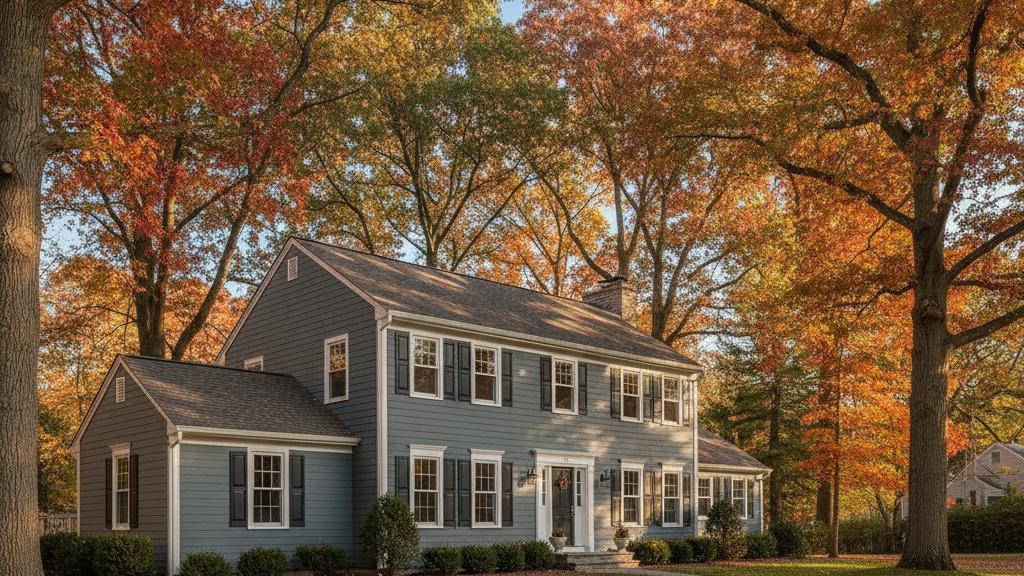
James Hardie fiber cement siding does tend to improve a home’s position at resale — but not because appraisers assign a line-item “Hardie premium.” The mechanism is more practical: new fiber cement siding removes a deferred-maintenance flag, stabilizes appraisal condition ratings, and shortens the list of things buyers negotiate against. In Westchester County’s market, where buyers routinely compare colonials side by side, eliminating a visible maintenance liability is worth real money.
Here’s how the math actually works — and where the value comes from in the context of Westchester’s specific housing stock and market.
Why Siding Condition Matters More in Westchester Than You’d Expect
Westchester County’s housing stock is older and more varied than most suburban markets. Along the Sound Shore — Larchmont, Mamaroneck, Rye, Port Chester — homes range from late-Victorian clapboard to postwar aluminum-sided Capes, many of which are a block from tidal water. Salt air, coastal storm exposure, and decades of paint cycles have worked on wood and vinyl siding in ways that show clearly to buyers walking up a front path.
Further inland, in neighborhoods like Scarsdale, White Plains, and Ardsley, the dominant stock is 1940s–1970s Colonials and ranch-style homes. Many carry original or early-replacement vinyl siding that is now 20 to 30 years old — at or past the point where fading, cracking, and panel gaps become visible from the street.
At these price points, the visual condition of the exterior carries real weight with both buyers and their agents, and siding in poor condition is one of the items that most reliably generates low-ball offers or post-inspection requests.
What the Remodeling Cost vs. Value Report Says
The Remodeling Magazine Cost vs. Value report — which tracks national and regional data on remodeling projects and their return at resale — consistently ranks fiber cement siding replacement as one of the highest-returning exterior projects. The exact recovery figure varies by year and region, and Westchester County is not separately broken out, so it would be inaccurate to quote a specific local percentage. What the national data consistently shows is that fiber cement siding replacement recovers a larger fraction of its cost at resale than most interior remodeling projects, and that exterior projects with visible, durable results tend to outperform cosmetic upgrades in competitive markets (per the Remodeling Cost vs. Value report at remodeling.hw.net).
The reason is straightforward: exterior siding is one of the first things a buyer sees and one of the first things an appraiser rates.
How Appraisers Look at Siding
Residential appraisers assign a condition rating that directly affects the appraised value. A property’s condition rating is typically based on observable deterioration, deferred maintenance, and the extent of updating. A home with visibly failing siding — peeling paint, cracked panels, rot at the base — will typically rate at a lower condition tier than an equivalent home with new or well-maintained siding.
Moving up a condition tier, or avoiding a downgrade, can affect the appraised value by an amount that varies with local comps — but in Westchester’s market, where median sale prices are high and comparable homes are plentiful, the spread between condition tiers is material. An appraiser looking at two otherwise-equivalent homes will reach for comparable sales that match on condition as well as square footage.
New James Hardie fiber cement, properly installed, presents as clearly updated siding with a long remaining service life (30-year non-prorated substrate warranty per James Hardie; rated ideal-condition lifespan of roughly 25–40 years per InterNACHI, though Westchester real-world service life runs somewhat shorter given Northeast freeze-thaw and storm exposure). That translates directly to favorable condition ratings.
What Buyers in Westchester Actually Notice
Beyond appraisal mechanics, buyer perception matters. A few things that buyers and their agents consistently react to on Westchester listings:
Faded or inconsistent color. Vinyl siding from the 1990s often fades unevenly. The south-facing side of a home may be a noticeably different color than the north face. James Hardie’s ColorPlus factory-applied finish carries a 15-year limited warranty against peeling, cracking, and chipping, and the color is consistent across all profiles and exposures.
Chalking paint or cracked clapboard. On wood-sided homes, buyers who know what they’re looking at will walk away from a house where the paint is at the end of its cycle — especially if the listing is priced at move-in condition. Fiber cement with a factory finish eliminates that signal.
Visible deterioration at grade and roof lines. The bottom courses and the trim around windows and rooflines are where wood siding fails first in Westchester’s climate. Hardie’s HZ5 installation specs require verified clearances from grade and deck surfaces (minimum 6 in. from grade; 2 in. from decks and roofs, per the HardieZone 5 Best Practices guide), and proper flashing at all roof-to-wall junctions. When these details are right, the most vulnerable areas are protected.
Rot or soft spots at probing. Home inspectors and experienced buyers probe the base of siding panels. Finding soft spots on a wood-sided home generates inspector flags and post-inspection negotiation. Fiber cement is a non-organic substrate — it has no food source for insects or fungi and does not rot.
The Insurance Angle
Some homeowners insurance carriers consider the material and condition of exterior siding when writing or renewing policies. Whether a new James Hardie installation affects your specific premium, or makes your home easier to underwrite, depends entirely on your carrier and their underwriting criteria — availability and terms vary by insurer. It is worth asking your agent. Gunner does not represent insurance outcomes, and you should confirm any expected benefit directly with your carrier or a licensed agent.
What the Installation Actually Covers
One thing worth understanding when evaluating the resale impact: fiber cement siding’s durability story is only as strong as the installation behind it. The layer that matters most is the one you can’t see: the water-resistive barrier (WRB) behind the cladding, required under IBC §1403.2.
Every Gunner siding project includes full WRB installation, correct flashing at all penetrations and roof-to-wall junctions, and verified ground clearances. Gunner is a James Hardie Elite Contractor, licensed, insured, and bonded in New York, and handles the building permit on every project — requirements vary by municipality in Westchester County, since incorporated villages administer their own permit programs and unincorporated town areas go through the town, per NYS Executive Law §381.
An installation done to spec — with WRB, correct flashing, and the right clearances — is what makes the 30-year substrate warranty and the 15-year finish warranty meaningful at resale. A buyer’s inspector will see the difference between a by-the-book installation and a shortcut.
How to Frame the Decision
If you’re replacing siding primarily to sell, the math is simpler: new fiber cement on a house with visibly failing siding removes a negotiating liability and improves appraisal condition. The recovery on the remodeling investment is meaningful (per national Cost vs. Value data), though the exact figure depends on your specific home, the local market at the time of sale, and the quality of the installation.
If you’re planning to stay in the house for another decade, the value story is partly at resale and partly in what you avoid: no repainting cycle, no annual maintenance, and a durable system that handles Westchester’s climate without ongoing attention.
FAQ
Q: Does James Hardie fiber cement siding increase home resale value in Westchester County?
New fiber cement siding improves resale position primarily by removing deferred-maintenance flags and supporting favorable appraisal condition ratings. In Westchester’s competitive market, visibly deteriorated siding is a common basis for low-ball offers and post-inspection negotiations. National Cost vs. Value data ranks fiber cement siding replacement among the highest-returning exterior projects, though Westchester-specific figures are not separately tracked.
Q: How do appraisers rate siding condition?
Residential appraisers assign condition ratings based on observable deterioration, deferred maintenance, and updates. A home with visibly failing siding typically rates lower than an equivalent home with new or well-maintained siding. In a market like Westchester, where comparable homes are plentiful, condition tier differences are material to appraised value.
Q: How long does James Hardie siding last in Westchester County?
James Hardie HZ5 fiber cement carries a 30-year non-prorated substrate warranty and a 15-year limited ColorPlus finish warranty. The InterNACHI Estimated Life Expectancy chart puts the rated ideal-condition lifespan at roughly 25–40 years; Westchester real-world service life is somewhat shorter given Northeast freeze-thaw and storm exposure.
Q: Does new James Hardie siding affect homeowners insurance?
That depends entirely on your carrier and their underwriting criteria. Availability and terms vary by insurer — ask your agent directly and confirm any expected benefit with your carrier or a licensed insurance professional.
Q: Do I need a permit to replace siding in Westchester County?
Yes. Siding replacement requires a building permit. The process varies by municipality; incorporated villages run their own programs and unincorporated areas go through the town, per NYS Executive Law §381. If your home is in a historic district, additional review may apply. Gunner pulls the permit on every project.
Q: What makes a James Hardie installation qualify for the 30-year warranty?
Installation to HardieZone 5 specs: water-resistive barrier behind the cladding, correct flashing at all penetrations, verified ground clearances (6 in. from grade; 2 in. from decks and roofs), and proper fastening. Gunner is a James Hardie Elite Contractor and installs to these requirements on every project.
Replacing siding on a Westchester home — and want to know exactly what new James Hardie fiber cement would cost? Get a free, no-obligation estimate at GunnerRoofing.com.
Get a fast, free quote
No inspection visit needed - we measure your roof from satellite imagery and send your quote.