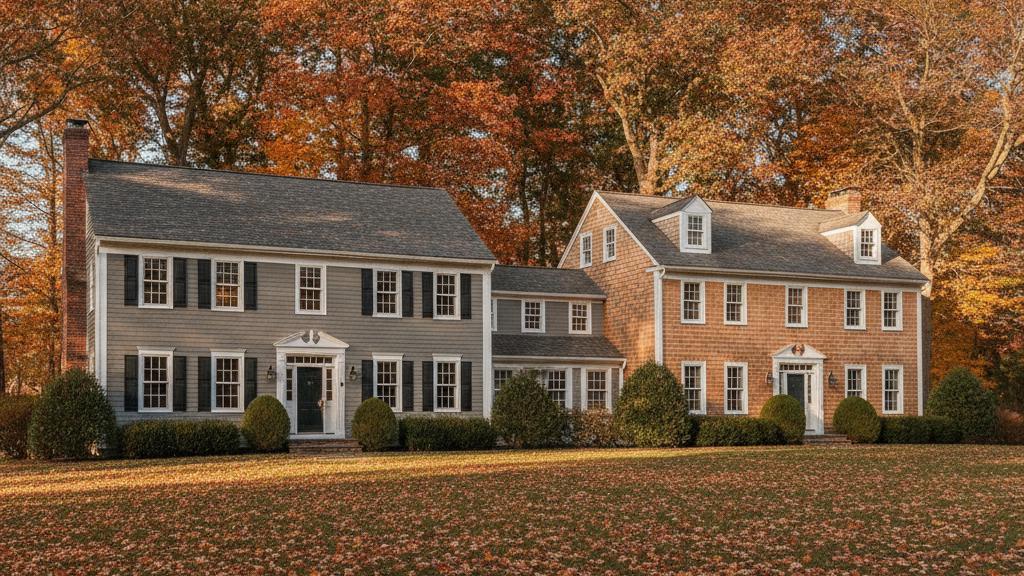
Replacing siding on a Westchester home almost always improves resale position — but the ROI difference between materials is real, and in Westchester’s market the stakes are higher than most. Here’s the short answer: fiber cement (James Hardie) and premium vinyl (CertainTeed) consistently rank among the highest-returning exterior projects nationally per the Remodeling Cost vs. Value report, while natural cedar delivers the strongest visual premium in the right neighborhood but comes with higher upfront cost and ongoing maintenance that buyers factor in. The material you choose should match your timeline to sale, your home’s architectural character, and whether you’re in a historic district.
| Material | Relative upfront cost | Typical rated lifespan (ideal) | Key Westchester strength | Key Westchester risk |
|---|---|---|---|---|
| James Hardie fiber cement | $$$ | ~25–40 yrs (InterNACHI) | Non-combustible; HZ5-rated for freeze-thaw; ColorPlus 15-yr finish warranty | Higher install cost than vinyl |
| CertainTeed premium vinyl | $$ | ~20–30 yrs (InterNACHI) | Low upfront cost; no repainting | Thermal expansion visible on cheap profiles; denting from hail |
| Natural cedar | $$$$ | ~20–30 yrs with maintenance (InterNACHI) | Premium aesthetic; fits historic/Tudor character | Repainting every 5–7 years; susceptible to rot and insects if not maintained |
Why Westchester Is Not a Typical Suburban Market
Westchester County’s housing stock is unusually diverse — and that matters for the ROI calculation. Along the Metro-North corridor, you’ll find Tudor Revival, Colonial, and Victorian-era homes in towns with established historic districts or locally landmarked neighborhoods. In those contexts, material choice isn’t purely a financial question: it may be subject to review by the local historic-preservation authority, and some materials are better received than others in terms of aesthetic compatibility with the original architecture.
Further inland — White Plains, Valhalla, Elmsford — the stock skews postwar: ranch homes and Colonials with original or early-replacement vinyl that is now decades old. In these neighborhoods, replacing failing vinyl with new premium vinyl or fiber cement is a straightforward condition improvement that buyers clearly see.
Along the Sound Shore — Larchmont, Mamaroneck, Rye — salt-air exposure and coastal storm cycles shorten material lifespans and make moisture management a serious installation consideration.
Each of these contexts points toward a different material answer.
Fiber Cement: The High-ROI Workhorse
James Hardie fiber cement is Gunner’s premium siding line — the option we lead with for most Westchester homeowners asking about resale ROI. The Cost vs. Value data is consistent: fiber cement siding replacement (not a cosmetic refresh) ranks among the highest-returning exterior projects in national and Middle Atlantic regional data. Westchester County is not separately broken out, so specific local percentages aren’t available from that source — but the mechanism is clear.
Fiber cement earns its return in several ways that are visible to buyers and appraisers:
Durability that shows. Hardie’s HZ5 specification is engineered for the freeze-thaw cycling that characterizes Westchester winters. The fiber cement substrate is non-combustible and resists insects and fungi. A buyer’s inspector probing the base of the siding will find nothing soft.
Warranty backing. The Hardie HZ5 substrate carries a 30-year non-prorated warranty; the ColorPlus factory-applied finish carries a 15-year limited warranty against peeling, cracking, and chipping. A warranty that transfers at sale is a documented asset; deteriorating vinyl with no remaining coverage is a liability.
Historic compatibility. Fiber cement lap profiles and shingle profiles can closely match the look of original wood clapboard or cedar shake, which matters in historic-corridor towns. Requirements vary by municipality — if your home is in a historic district or locally landmarked, confirm material acceptability with your local historic-district or landmarks commission before choosing.
The tradeoff is higher upfront cost than vinyl, and installation is more labor-intensive. Gunner is a James Hardie Elite Contractor, and every Gunner siding project includes full water-resistive barrier (WRB) installation, correct flashing at all penetrations and roof-to-wall junctions, and verified ground clearances (minimum 6 in. from grade; 2 in. from decks and roofs per the HZ5 Best Practices guide). That installation quality is what makes the warranty valid and the long-term durability story credible at resale.
Premium Vinyl: The Practical Middle Ground
CertainTeed is Gunner’s recommended vinyl line. Premium vinyl — thicker profiles, coextruded construction — delivers a meaningful performance step up from builder-grade vinyl, and the Cost vs. Value data shows vinyl siding replacement consistently recovers a significant portion of its cost at resale.
Vinyl’s strengths for Westchester: lower upfront cost, no repainting required, and a wide color range that handles the color conventions of Westchester’s suburban Colonial stock. CertainTeed’s thicker profiles resist denting better than builder-grade; per CertainTeed’s installation guidance, thicker profiles offer better impact resistance than standard-thickness panels.
The weaknesses are worth being honest about. Vinyl expands and contracts with temperature — thermal movement is real in Westchester’s climate, and if it’s improperly nailed (the Vinyl Siding Institute installation standard specifies loose-nailing to allow movement), panels can buckle or pull. Denting from hail or debris is more likely with vinyl than with fiber cement; IBHS research on hail impact resistance confirms fiber cement holds up better under hail loading than vinyl of comparable thickness.
For a home positioned in the mid-tier of Westchester’s market — postwar Colonial, solid bones, vinyl that’s showing its age — premium vinyl replacement is a straightforward, cost-effective condition improvement. For a home at the high end where buyers expect premium finishes, fiber cement is the stronger play.
Natural Cedar: The Premium Aesthetic, With Commitment
Gunner is a Cedar Shake & Shingle Bureau (CSSB) member, and natural cedar siding is part of what we install on the right project. Cedar’s ROI case is strongest in one specific context: a high-value, architecturally significant home where cedar is the historically correct or architecturally expected material, and where the owner or buyer is prepared for the ongoing maintenance commitment.
The InterNACHI Estimated Life Expectancy chart puts cedar’s rated lifespan at roughly 20–30 years under ideal conditions — but “ideal conditions” means a proper painting or staining cycle every few years, correct clearances from grade, and prompt attention to any areas where moisture can accumulate. In Westchester’s climate, a cedar installation that isn’t maintained will deteriorate noticeably faster.
For a buyer weighing two otherwise equivalent homes, unpainted or weathered cedar signals deferred maintenance. Fresh, properly finished cedar on a Tudor or Victorian home signals care and investment. The difference between those two conditions is the entire cedar ROI story: the value is real, but it requires ongoing commitment after sale.
The upfront cost is the highest of the three options, and buyers in Westchester’s market do factor in ongoing maintenance cost when evaluating older or higher-maintenance exterior materials.
The Fall Timing Factor
For Westchester homeowners planning to list in spring — a common scenario — fall is the ideal window to start the siding decision process. There are two practical reasons.
First, James Hardie installation has temperature constraints: the HZ5 Best Practices guide specifies installation temperature requirements, and while work can proceed in cooler fall weather, scheduling before the ground freezes gives crews the best working conditions. Starting the process in October rather than waiting for March means you’re not compressed against spring listing pressure.
Second, fall is when the condition of existing siding is most visible. After a summer of heat cycling and before snow cover, failing caulk joints, faded panels, and rot at grade are easiest to photograph and document. Getting a quote in fall gives you a realistic project cost before committing to a spring list date.
What the Installation Includes
The ROI case for any siding material depends entirely on the quality of the installation behind it. The layer that protects long-term value isn’t the cladding — it’s the water-resistive barrier (WRB) required under IBC §1403.2, the flashing at every penetration and roof-to-wall junction, and the correct ground clearances. Shortcuts here shorten service life and show up on buyer inspections.
Every Gunner siding project includes full WRB installation, correct flashing, and verified clearances. Gunner handles the building permit on every project — requirements vary by municipality in Westchester County, as incorporated villages administer their own programs and unincorporated town areas go through the town, per NYS Executive Law §381. Gunner is fully licensed, insured, and bonded in New York.
If your home is in a historic district or locally landmarked area, confirm material and color requirements with your local historic-district or landmarks commission before finalizing a material choice. Material acceptability varies by jurisdiction, and there is no universal answer for Westchester County.
FAQ
Q: Does replacing siding increase home resale value in Westchester County? Yes. Siding replacement removes a deferred-maintenance liability, supports favorable appraisal condition ratings, and reduces post-inspection negotiation. National Cost vs. Value data consistently ranks fiber cement and vinyl siding replacement among the highest-returning exterior projects; Westchester-specific figures are not separately tracked, but the mechanism is clear in a high-price, competitive market.
Q: Which material gives the best ROI — fiber cement, vinyl, or cedar? Fiber cement (James Hardie) and premium vinyl (CertainTeed) lead on cost-vs-value return. Fiber cement has the stronger long-term story and warranty, at higher upfront cost. Premium vinyl is cost-effective for mid-tier homes. Cedar is the premium aesthetic choice for architecturally significant homes but requires maintenance commitment buyers factor in.
Q: How long does James Hardie fiber cement last in Westchester? 30-year non-prorated substrate warranty; 15-year limited ColorPlus finish warranty. Rated ideal-condition lifespan roughly 25–40 years per InterNACHI; real-world Westchester service life somewhat shorter given freeze-thaw, humidity, and storm exposure.
Q: Do I need a permit to replace siding in Westchester County? Yes. Requirements vary by municipality — incorporated villages run their own programs, unincorporated areas go through the town, per NYS Executive Law §381. Historic district or landmarked homes may require additional review. Gunner pulls the permit on every project.
Q: Is fall a good time to replace siding before a spring listing? Yes. Starting in fall avoids spring scheduling pressure, allows crews good working conditions before deep winter, and is when failing siding is easiest to assess and document.
Q: Does new siding affect homeowners insurance in New York? That depends on your carrier and their underwriting criteria — availability and terms vary by insurer. Ask your agent and confirm any expected benefit directly with your carrier or a licensed insurance professional.
Replacing siding on a Westchester home and want to know exactly what fiber cement, vinyl, or cedar would cost? Get a free, no-obligation estimate at GunnerRoofing.com.
Get a fast, free quote
No inspection visit needed - we measure your roof from satellite imagery and send your quote.