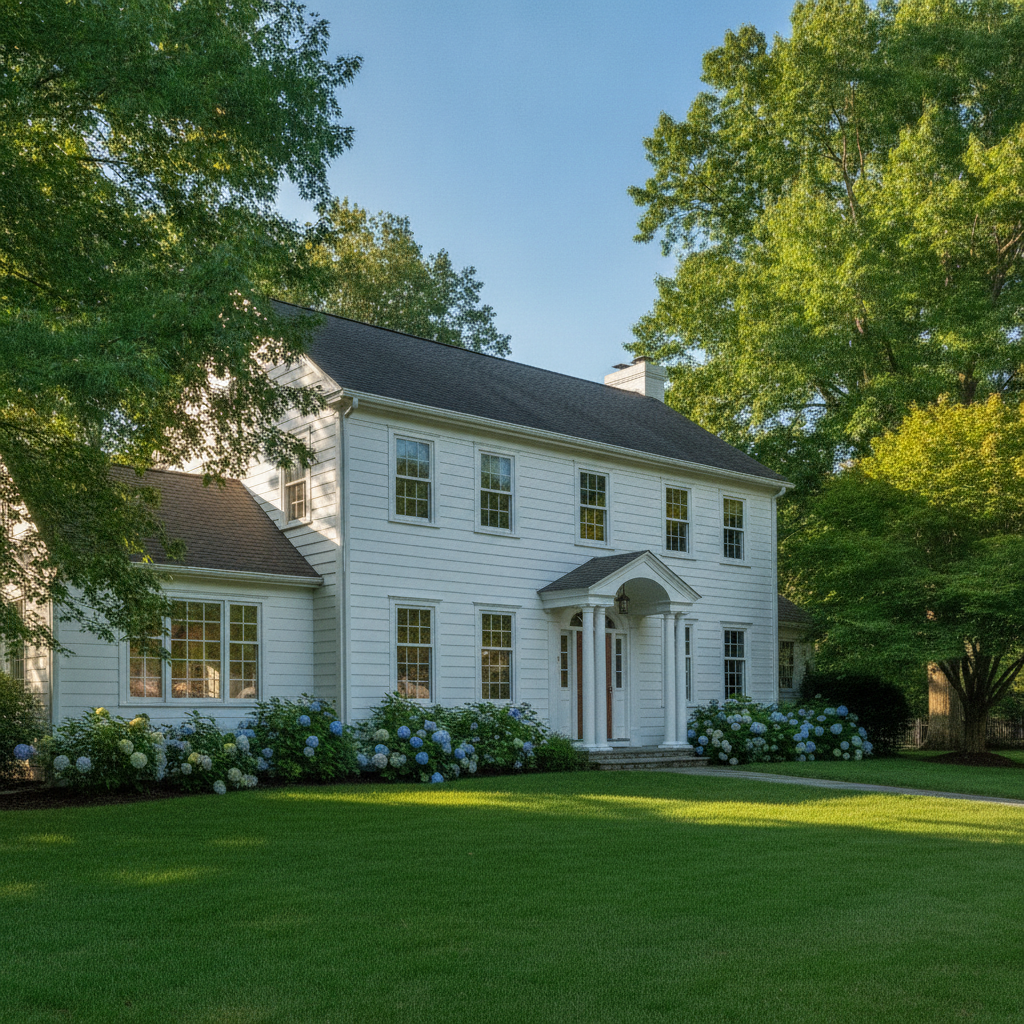
Double-hung or casement: which window is right for your Yonkers home?
For most Yonkers homes, the choice comes down to character versus efficiency. Double-hung windows — two sashes that slide vertically — suit the city’s older Colonials, Victorians, and two- and three-family houses, fit standard window air conditioners, and never project into a walkway. Casement windows — a single sash on side hinges, opened with a crank — seal tighter and are the most energy-efficient operable style, open fully for ventilation, and give an unobstructed view, which makes them a strong fit for kitchens, additions, and rear elevations. Both meet New York’s energy code; casement has a small edge on air-tightness, while double-hung wins on classic looks and AC compatibility. The right answer usually varies room by room.
Side-by-side comparison
| Factor | Double-hung | Casement |
|---|---|---|
| How it operates | Two sashes slide vertically | One sash, side-hinged, crank-operated |
| Seal type | Weatherstripping along sliding sashes | Compression seal around the full sash perimeter |
| Air-tightness / efficiency | Very good | Highest among operable styles |
| Ventilation | Open top, bottom, or both | Full sash swings open; catches side breezes |
| View | Meeting rail divides the glass | Unobstructed single pane |
| Window AC unit | Fits standard units | Not compatible |
| Over a sink or counter | Harder to reach and lift | Crank makes it easy to reach |
| Projects outward | No — safe beside walks, decks, patios | Yes — keep clear of paths and high-traffic areas |
| Cleaning | Both sashes tilt in | Crank fully open, reach the exterior from inside |
| Screen location | Exterior | Interior |
| Best Yonkers fit | Colonials, Victorians, historic blocks, AC-dependent rooms | Kitchens, additions, efficiency-first and view-first rooms |
Both styles are widely available in vinyl, fiberglass, and wood frames, and both can be ordered to meet — or exceed — New York’s energy code. The differences below are about how each one behaves day to day.
Double-hung windows
A double-hung window has two operable sashes set in a single frame. The lower sash slides up and the upper sash slides down, so you can vent from the bottom, the top, or both at once. On modern units, both sashes tilt inward, which lets you clean the outside glass from inside the house — a real advantage on a second or third floor.
Why Yonkers homeowners choose them. Double-hung is the traditional American window, and its proportions match the tall, narrow openings found throughout Yonkers’ early-1900s housing stock. Opening the top sash lets hot air escape near the ceiling while keeping the lower sash closed — useful in homes with children or pets. Because the sash slides rather than swings, a double-hung window sits flush with the wall and never projects over a porch, walkway, or driveway. It also accepts a standard window air conditioner, which still matters in older Yonkers homes without central air.
The trade-offs. A double-hung relies on weatherstripping along moving sashes, so it has more potential air paths than a fixed compression seal. According to the U.S. Department of Energy, sliding windows generally allow somewhat more air leakage than hinged styles. The difference is modest with a quality, well-installed unit, but it is real. The sliding hardware and balances are also moving parts that can wear over decades of use.
Best fit. Front and street-facing elevations on Colonials, Victorians, and the two- and three-family houses common in neighborhoods like Park Hill, Colonial Heights, and Crestwood; any room where you want to run a window AC unit; and openings above walkways or decks where a projecting sash would be a hazard.
Casement windows
A casement window is hinged on one side and swings outward like a door, operated by a hand crank. When you close it, the sash pulls tight against the frame and compresses a continuous gasket around its entire perimeter.
Why Yonkers homeowners choose them. That compression seal is the reason casement windows are typically the most air-tight, most energy-efficient operable style — Marvin and the Department of Energy both point to the full-perimeter seal as the key advantage over sliding windows. The whole sash opens, so you get more free ventilation area than a double-hung of the same size, and an open casement can scoop side breezes into the room. With no meeting rail, the glass is one unbroken pane for a cleaner view. The crank is easy to operate over a kitchen sink or behind a counter, where reaching up to lift a sash is awkward.
The trade-offs. A casement sash projects outward when open, so it is a poor choice over a walkway, patio, deck, or anywhere people pass close to the wall, and a strong gust can catch an open sash. It will not accommodate a standard window air conditioner. The screen mounts on the interior, and the crank mechanism is the part most likely to need service over the window’s life. Installed cost typically runs a little higher than a comparable double-hung because of the operating hardware.
Best fit. Kitchens (especially over the sink), bathrooms, additions and sunrooms, rear and side elevations, and any room where energy performance, maximum ventilation, or an unobstructed view is the priority.
Energy efficiency: what the numbers mean in Yonkers
Window energy performance is measured by two NFRC ratings on the label: U-factor (how well the window resists heat loss — lower is better) and SHGC, the solar heat gain coefficient (how much solar heat passes through). Air leakage is rated separately in cubic feet per minute per square foot (cfm/ft²) using the ASTM E283 test.
- New York code floor. Yonkers sits in IECC Climate Zone 4. Under the 2020 New York State Energy Conservation Construction Code (Table R402.1.2), replacement windows must hit a maximum U-factor of 0.32 and a maximum SHGC of 0.40. Every compliant window — double-hung or casement — meets this.
- ENERGY STAR, the better target. Yonkers falls in ENERGY STAR’s Northern climate zone. The current Version 7.0 criteria (in effect since October 2023 and still current in 2026) tighten the bar to a U-factor of 0.22 or lower, with a minimum SHGC of 0.17 so the window still captures useful winter sun. ENERGY STAR also caps air infiltration at 0.30 cfm/ft².
Both window styles are sold in ENERGY STAR-qualified versions, so style is not what determines whether you meet the standard — glass package and construction are. Where casement has the structural edge is air infiltration: its compression seal makes it easier to push leakage well below the limit. That said, the Department of Energy notes the gap is smaller than many homeowners expect, and a well-installed double-hung will outperform a poorly installed casement every time. Installation quality is the variable that matters most.
What makes Yonkers a specific case
The housing stock. Yonkers is New York’s fourth-largest city, and much of its housing predates World War II: Colonials, Victorians, rowhouses, and the two- and three-family homes that fill neighborhoods from Getty Square to Crestwood. These homes were built with tall, vertically proportioned window openings that double-hung sashes match naturally. Kitchens, rear additions, and renovated spaces are where casement windows tend to make the most sense.
Climate. Homes along the Hudson River corridor see real freeze-thaw winters and humid summers. Many older Yonkers houses still have original single-pane or aging double-pane windows, so a replacement project is often as much about cutting drafts and heating bills as it is about looks — which is where the U-factor and air-infiltration numbers above pay off.
Historic character. In Yonkers neighborhoods with strong period character — Lawrence Park West, for example — double-hung windows that match the home’s original proportions and sightlines are usually the better fit. If your home is in or near a historic area, confirm any appearance requirements before you order.
Permits. Replacing windows in Yonkers requires a building permit through the Department of Housing and Buildings (20 South Broadway, 3rd Floor; 914-377-6500), filed online through the city’s City Squared portal. For work on a one- to three-family home, the contractor must also hold a Yonkers Home Improvement Contractor’s License. Gunner Roofing pulls the required permits and handles the filing as part of every project. Confirm the current energy requirement for replacement windows with the Department before finalizing your order, as local requirements can be stricter than the state code floor.
Which window is right for your home?
- Older, street-facing, or historic elevations: double-hung. It matches Yonkers’ traditional proportions, sits flush with the wall, and takes a window AC unit.
- Kitchens and over counters: casement. The crank is easy to reach and the full opening moves more air.
- Energy and air-sealing first: casement, with its full-perimeter compression seal — but only with quality installation.
- Above a walkway, deck, or patio: double-hung, so nothing projects into the path.
- Whole-house replacement: most Yonkers homes end up with a mix — double-hung where character and AC matter, casement where efficiency and ventilation lead.
Gunner Roofing installs both double-hung and casement windows across Yonkers, Westchester County, and the rest of New York and Connecticut, and pulls every required permit as part of the job.
Frequently asked questions
Are casement or double-hung windows more energy efficient? Casement windows are generally the more energy-efficient operable style because the sash compresses against a continuous gasket around its full perimeter when closed, which limits air leakage. Double-hung windows seal with weatherstripping along sliding sashes, so they tend to allow a little more air infiltration. The gap is smaller than most homeowners expect, and a well-installed double-hung will outperform a poorly installed casement. Both are available in ENERGY STAR-qualified versions.
Do I need a permit to replace windows in Yonkers, NY? Yes. Window replacement in Yonkers requires a building permit from the Department of Housing and Buildings, filed through the city’s online City Squared portal. For one- to three-family homes, the contractor must also hold a Yonkers Home Improvement Contractor’s License. Gunner Roofing handles the permit application as part of every project.
What U-factor do replacement windows need to meet in Yonkers? Yonkers is in IECC Climate Zone 4. The 2020 New York State Energy Conservation Construction Code sets a maximum fenestration U-factor of 0.32 and a maximum SHGC of 0.40 for that zone. For better performance, look for ENERGY STAR Version 7.0 Northern-zone windows, which require a U-factor of 0.22 or lower. Confirm the current local requirement with the Department of Housing and Buildings before ordering.
Can I put a window air conditioner in a casement window? Not a standard one. Window AC units are designed for double-hung (and some sliding) windows, where the sash closes down on top of the unit. Casement windows swing outward and have no horizontal sash to secure a standard AC against. If a room depends on a window air conditioner, choose double-hung, or plan for a through-wall, portable, or mini-split unit instead.
Which window style is best for an older Yonkers home? For the street-facing elevations of Yonkers’ older Colonials, Victorians, and two- and three-family homes, double-hung windows usually fit best — their vertical proportions match the original openings and they sit flush with the wall. Casement windows are often the better pick for kitchens, additions, and rear elevations where efficiency, ventilation, or an unobstructed view matters more than period appearance.
Get a fast, free quote
No inspection visit needed - we measure your roof from satellite imagery and send your quote.