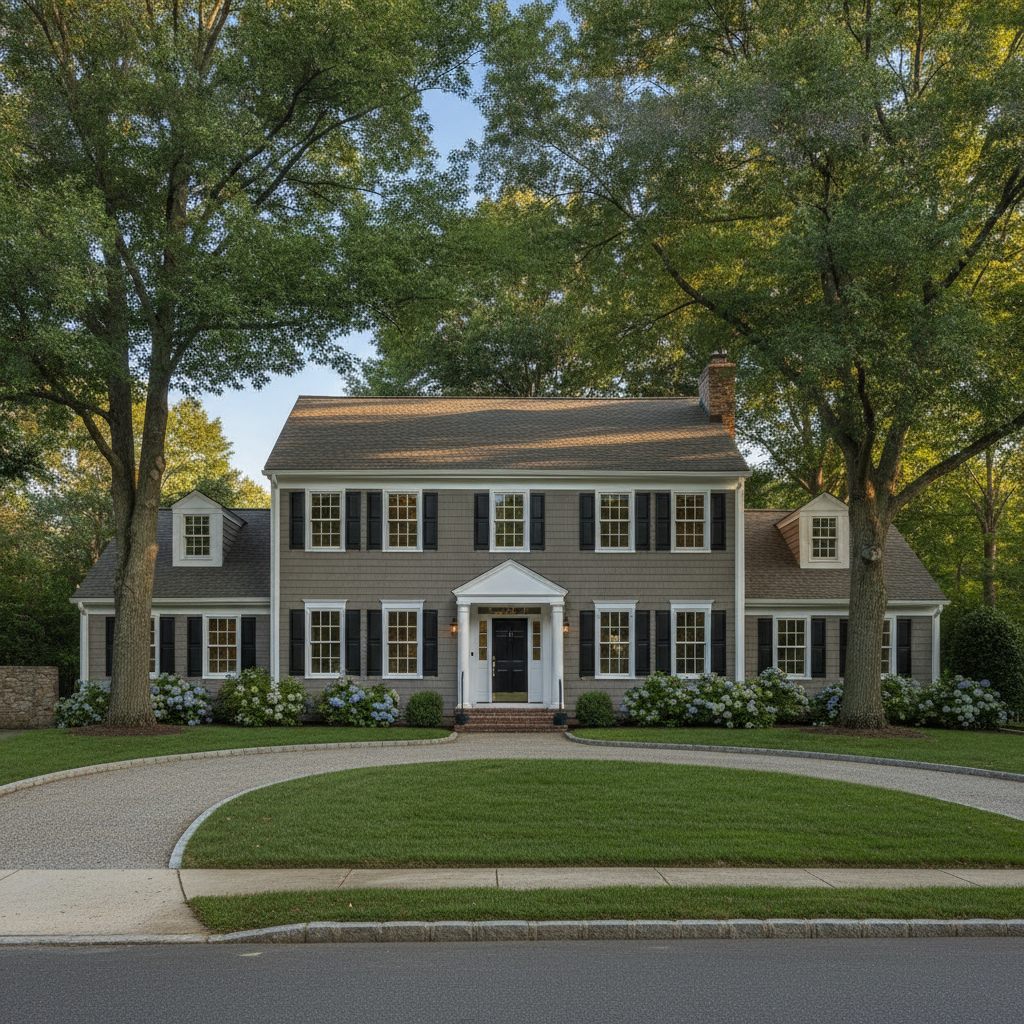
Fiber cement, vinyl, or engineered wood: which siding is right for your Westchester County home?
In Westchester County, the three materials that account for nearly all residential siding replacements are fiber cement, vinyl, and engineered wood. Fiber cement (James Hardie is the dominant brand) is the most durable and fire-resistant, but it costs more and weighs more. Vinyl is the lowest upfront cost and largely maintenance-free, but it can look thin on older Colonials and Tudors and cannot be repainted. Engineered wood (LP SmartSide is the most common) bridges the gap: it looks more like real wood than vinyl, weighs less than fiber cement, and accepts paint. All three perform in Westchester’s freeze-thaw climate, but the right choice depends on the housing era, coastal vs. inland location, and whether the property sits in a historic district.
Side-by-side comparison
| Factor | Fiber cement | Vinyl | Engineered wood |
|---|---|---|---|
| Typical lifespan (ideal conditions) | 50 years | 40 years | 30 years |
| Typical Westchester real-world lifespan | 35–45 years | 25–35 years | 20–25 years |
| Installed cost (relative) | Highest | Lowest | Mid-range |
| Weight | Heavy (~2.5–3.5 lbs/sq ft) | Light (~0.5 lbs/sq ft) | Moderate (~1–1.5 lbs/sq ft) |
| Paintable | Yes | No | Yes |
| Fire resistance | Excellent (noncombustible) | Poor — melts under heat | Moderate (Class 1/A assembly rating) |
| Moisture resistance | Excellent when primed and painted | Excellent | Good — seams must be caulked, cut edges field-primed |
| Salt-air suitability | Excellent | Excellent | Good |
| Maintenance | Repaint every 10–15 years | Rinse occasionally | Repaint every 8–12 years |
| Typical warranty | 30-year (James Hardie ColorPlus finish) | 30–50-year limited | 50-year substrate (LP SmartSide) |
Lifespan figures are real-world Westchester estimates. Ideal-condition ranges (InterNACHI) run higher; Westchester’s roughly 100 annual freeze-thaw cycles, coastal humidity in Sound Shore towns, and periodic Nor’easters bring actual service life lower for all three. Warranty terms are quoted exactly as manufacturer-stated and are not shortened.
Fiber cement siding
Fiber cement is a compressed mixture of Portland cement, sand, and cellulose fibers. James Hardie is the primary manufacturer, and their HardiePlank lap siding and HardieShingle panels are the products Gunner Roofing most commonly installs in Westchester County.
Why it is the premium choice. Fiber cement is noncombustible — it will not ignite or contribute fuel to a fire. It does not rot, warp, or attract insects. It is dimensionally stable through extreme temperature swings, which matters in a climate that runs from single digits in January to 95°F in August. James Hardie’s HardieZone 5 product line is engineered specifically for the Northeast’s cold winters and high summer humidity. The substrate is formulated to resist water intrusion during freeze-thaw cycles.
The trade-offs. Fiber cement is heavy. A full re-siding of a 2,500-square-foot Colonial in Scarsdale or Larchmont involves hundreds of panels that each weigh 25–30 lbs. Labor time and cost are higher than vinyl. And unlike vinyl, fiber cement requires repainting every 10–15 years. James Hardie’s factory-applied ColorPlus finish delays that cycle and carries a separate 15-year color warranty, but it adds to the upfront cost.
Best fit in Westchester. Colonials, Tudors, and larger homes in communities where period-appropriate profile and long-term durability justify the upfront cost — Scarsdale, Bronxville, Rye, Harrison. Also the most common material approved in historic district reviews because it can be profiled and detailed to replicate original wood clapboard.
Vinyl siding
Vinyl siding is extruded PVC available in a wide range of profiles, textures, and colors. It is the most-installed siding type in the United States: low maintenance, moisture-proof, and its color is baked into the material rather than applied on top.
Why it is the practical choice. Vinyl is the lowest installed cost of the three materials. A well-installed vinyl job in Yonkers or Greenburgh will last 25–35 years with nothing more than an occasional rinse. Because it does not absorb water, it is immune to rot and will not swell or split in freeze-thaw cycles. Installation is fast, which reduces labor cost. Profile and texture options have improved significantly in the last decade — heavier-gauge, double-4 and double-5 profiles read better on two-story homes than older thin-profile products.
The trade-offs. Vinyl cannot be painted. When it fades or chalks, or when you want a color change, replacement is the only option. In a house fire, vinyl melts and can release chlorine gas. Impact resistance is moderate: in deep cold (below about 10°F), vinyl becomes brittle enough that significant impact — a tree branch, large hail — can crack panels.
Best fit in Westchester. Rental properties, starter homes, and homeowners who want a durable, low-maintenance solution on a clear budget. Common in Yonkers, Mount Vernon, and New Rochelle residential neighborhoods. Vinyl performs well in the Sound Shore coastal towns — salt air is not a meaningful risk factor for PVC.
Engineered wood siding
Engineered wood, most commonly LP SmartSide, is a strand-based composite treated with zinc borate for rot and insect resistance and overlaid with a resin-saturated surface. It is designed to replicate real wood siding: it mills cleanly, accepts nails and paint exactly like wood, and can be trimmed and detailed to match historic profiles.
Why it bridges the gap. LP SmartSide costs more than vinyl but less than fiber cement. It is significantly lighter than fiber cement, which reduces labor on tall or complex homes. The surface accepts paint the same way real cedar would, making it compatible with homes where wood grain texture and profile matter. LP backs the substrate with a 50-year limited warranty.
The trade-offs. Engineered wood is not immune to moisture. Every cut edge must be field-primed, and every penetration — windows, doors, electrical outlets, hose bibs — must be caulked carefully. Gaps in this step allow moisture infiltration at seams, which is the product’s primary failure mode. Unlike fiber cement, it is combustible, though LP SmartSide carries a Class 1 (Class A) fire-resistance rating as a tested assembly. Real-world lifespan in Westchester is shorter than fiber cement: plan on repainting within 8–12 years and budget for 20–25 years before substrate degradation becomes a concern.
Best fit in Westchester. Homes where wood aesthetics matter but fiber cement’s weight or price is a barrier. Works well on Cape Cods, cottages, and bungalows in northern Westchester towns — Ossining, Cortlandt, Yorktown — where the wood-grain profile fits the surroundings and the owner intends to paint.
What makes Westchester County a specific case
The housing stock. Westchester is one of the older suburban counties in the country. Homes in Bronxville, Scarsdale, Eastchester, and Pelham often date to the 1920s and 1930s, with profiles — wide clapboard, half-timber trim, cedar shingles — that fiber cement can replicate closely. Yonkers, Mount Vernon, and New Rochelle include substantial mid-century ranch and split-level stock where vinyl or engineered wood is the practical fit. Northern Westchester towns like Yorktown and Somers have more varied mix: older farmhouses, colonials, and suburban ranch homes built through the 1970s.
Coastal vs. inland climate. Sound Shore municipalities — Rye, Port Chester, Mamaroneck, Larchmont, New Rochelle, Pelham — sit on or near Long Island Sound. Salt air and elevated humidity are persistent factors. All three siding materials tolerate coastal exposure reasonably well, but fiber cement and vinyl have a clear edge over raw wood. Northern Westchester sees more severe inland freeze-thaw and heavier ice-storm events. Fiber cement’s dimensional stability under extreme temperature swings is its strongest advantage in that environment.
Historic districts. Several Westchester municipalities have historic preservation commissions with jurisdiction over exterior materials and appearance. Tarrytown, Sleepy Hollow, Irvington, Dobbs Ferry, and Port Chester all have some level of historic district overlay. Vinyl is frequently disallowed in these districts because it cannot replicate the profile of original clapboard or shingles. Fiber cement profiled to match the original material is the most common approved substitute. Always confirm with your local building department and historic commission before selecting a material.
Permitting. A full siding replacement in any Westchester municipality requires a building permit. Requirements are set at the town or city level — Westchester County government does not issue siding permits. Some jurisdictions require an energy code review under the 2020 New York State ECCC for full re-siding, particularly where continuous insulation is specified. Gunner Roofing pulls all required permits and coordinates directly with the local building department.
Which material is right for your home?
- Long-term ownership, historic or high-end home: fiber cement. The weight, cost, and repainting cadence are the trade-offs; the durability and fire resistance are the payoff.
- Budget-driven, maintenance-averse: vinyl. Durable, low installed cost, and genuinely low-maintenance for 25-plus years.
- Wood aesthetic without full fiber cement cost: engineered wood. Commit to proper installation with caulked seams and field-primed cut edges or the product’s moisture resistance will fall short.
- Historic district property: check with your local commission first. Vinyl is often disallowed; fiber cement profiled to replicate original clapboard is the most commonly approved choice.
- Sound Shore coastal town: fiber cement or vinyl. Both handle salt air well; fiber cement adds fire resistance and the longer lifespan.
Gunner Roofing installs all three — James Hardie fiber cement, vinyl, and LP SmartSide engineered wood — across Westchester County, NY and Fairfield County, CT.
Frequently asked questions
What is the most durable siding option for a Westchester County home? Fiber cement, specifically James Hardie products engineered for HardieZone 5 (the Northeast’s climate zone), is the most durable option available. It is noncombustible, resists rot and insects, and does not swell or crack in freeze-thaw cycles. Typical real-world lifespan in Westchester County is 35–45 years; the rated lifespan under ideal conditions is 50 years.
Can vinyl siding be painted? Vinyl siding is not designed to hold paint long-term. The PVC material carries its color in the material itself, not in a surface coating. Painting vinyl is possible but the finish tends to peel within a few years, especially in Westchester’s temperature swings. When vinyl fades or you want a color change, panel replacement or full re-siding is the practical solution.
Do I need a permit to replace siding in Westchester County? Yes. A full siding replacement triggers a building permit requirement in every Westchester municipality. Permits are issued at the town or city level — not by Westchester County. Some towns require an energy code review under the 2020 New York State ECCC for full re-siding projects. Gunner Roofing handles the permit application as part of every project.
Is engineered wood siding a good choice for older Westchester homes? It is a strong fit when the wood-grain profile matters and the budget does not support fiber cement. The critical condition is thorough installation: every cut edge must be field-primed and every seam and penetration caulked. Homes in northern Westchester towns like Yorktown, Cortlandt, and Ossining are a natural match. For Sound Shore coastal locations, fiber cement or vinyl are more forgiving choices.
What siding material is typically approved in Westchester historic districts? Vinyl is frequently disallowed because it cannot replicate the profile of original clapboard, shingles, or half-timber trim. Fiber cement detailed to match the original material is the most common approved substitute. Requirements vary by district and municipality — always confirm with your town’s building department and local historic preservation commission before ordering material.
Get a fast, free quote
No inspection visit needed - we measure your roof from satellite imagery and send your quote.