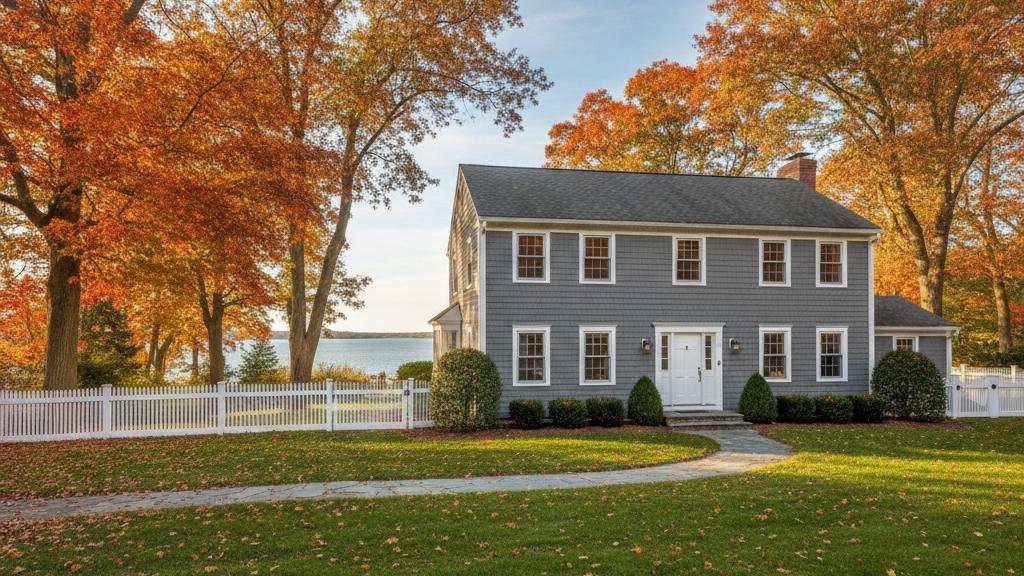
James Hardie fiber cement holds up well against salt air in eastern Westchester County, NY — specifically because it has no organic material in the panel face that salt can work into. Premium vinyl is a solid second choice for lots with moderate salt exposure. Cedar performs well but requires a consistent maintenance commitment that salt air makes more demanding. The key distinction isn’t which material exists — it’s which failure mode is hardest to live with.
| Material | Primary Salt-Air Failure Mode | How the Failure Shows | Maintenance to Delay Failure |
|---|---|---|---|
| James Hardie fiber cement (HZ5) | Fastener corrosion staining if wrong nail type used | Rust streaking down panel face from nail heads | Correct stainless/HDG fasteners at install — no ongoing action |
| Premium vinyl (CertainTeed) | UV chalking + color fade accelerated by salt spray | Surface hazing, color washout on Sound-facing elevations | None for the siding itself; siding can be washed |
| Cedar | Moisture absorption + salt under finish → delamination and rot | Peeling paint, gray weathering, soft spots near base | Repaint/restain on consistent schedule (more frequent near water) |
Why Eastern Westchester Has a Specific Salt-Air Gradient
The coastal siding question isn’t uniform across Westchester County. Towns directly on Long Island Sound — Rye, Mamaroneck, Larchmont — sit at one end of the exposure range. The inland towns — Scarsdale, White Plains, Armonk — are essentially not a coastal concern at all.
Eastern Westchester’s border towns (Port Chester, Rye, Mamaroneck, and the Harrison and Purchase areas just inland from the NY-CT line) sit in a middle zone. These aren’t deep-inland locations, but they’re also not open-water-frontage properties. What they get is:
- Prevailing southwest wind carrying salt-laden marine air off Long Island Sound, reaching its inland fade-out somewhere in this corridor
- Nor’easter exposure from the northeast, where Sound-channel fetch delivers wind-driven salt spray to any south- or east-facing elevation
- Moderate freeze-thaw cycling combined with this residual coastal moisture — a combination that accelerates certain failure modes faster than either factor alone
This isn’t a dramatic difference from open Sound-front exposure, but it’s a real one. And it matters most for two specific materials: cedar (which absorbs what vinyl and fiber cement don’t) and standard carbon-steel fasteners (which corrode in ways that visibly stain the cladding in front of them).
How Salt Air Actually Attacks Each Material
Understanding failure mode is more useful than a simple ranking. Each material fails differently, which means the right choice depends on which failure mode is most tolerable for your situation.
Fiber Cement: The Fastener Is the Weak Link
James Hardie fiber cement panels themselves are inorganic — Portland cement, sand, and cellulose fiber. The panel face doesn’t absorb salt, doesn’t swell, and doesn’t corrode, as reflected in its ASTM E136 non-combustible classification per James Hardie’s published performance data. Left alone, the panel will not degrade from salt air contact.
The failure point is the fastener. Per the James Hardie HZ5 Best-Practice Installation Guide, fiber cement in HardieZone 5 (New York and Connecticut) requires either hot-dip galvanized (HDG) or stainless steel nails — specifically to prevent corrosion in high-humidity and coastal conditions. Standard carbon-steel nails corrode at the fastener head and stain the panel face with rust streaks. This failure is cosmetic in early stages but eventually creates a pathway for moisture behind the panel if the fastener head deteriorates.
The other HZ5 installation requirements — a continuous water-resistive barrier behind the panel, correct flashing at all openings, and minimum clearances from grade and roof surfaces — matter in coastal zones exactly because salt-air conditions carry more ambient moisture than inland sites. Per IBC 2021 §1403.2, a WRB is required behind exterior cladding in any case; in coastal Westchester, it also acts as the final defense against the moisture load that salt air brings.
James Hardie backs the HZ5 substrate with a 30-year non-prorated warranty and the ColorPlus factory finish with a 15-year limited warranty against peeling, cracking, and chipping.
Vinyl: UV and Salt Together, Not Salt Alone
Vinyl siding doesn’t corrode, doesn’t absorb moisture the way wood does, and needs no painting — which is a genuine advantage in salt-air environments where maintenance cycles are punishing on organic materials. Premium profiles, such as the CertainTeed lines Gunner installs, hold up better than builder-grade products in both wind uplift and impact scenarios, per the CertainTeed installation guide and VSI industry standards.
The nuance for coastal locations: salt spray and UV radiation work together on vinyl in a way neither does alone as effectively. The chalky surface degradation and color fade that UV causes accelerates when salt residue sits on the panel surface. For a south- or east-facing elevation that gets both direct sun and salt-laden wind off Long Island Sound, the visual degradation is more pronounced and faster than on a shaded or sheltered face.
Vinyl also expands and contracts significantly with temperature. Per the VSI Installation Manual, correct installation leaves room for thermal movement — over-nailed vinyl buckles in summer and can rattle under negative-pressure wind loads in Nor’easters. On coastal homes in eastern Westchester, this means installation technique is as consequential as product selection.
Cedar: Salt Air Makes a Demanding Maintenance Schedule More Demanding
Cedar’s core vulnerability near the water is its organic nature: it absorbs moisture, and salt air elevates the ambient humidity that drives moisture cycling into and out of the panel. Per Cedar Shake & Shingle Bureau (CSSB) maintenance standards, cedar siding requires regular painting or staining with a proper sealant to protect the substrate — and that cycle is more frequent near salt air than inland.
What salt air specifically accelerates: once paint or stain begins to thin at the edges or at fastener penetrations (normal weathering), salt in the air wicks into those gaps. This carries moisture deeper into the cedar than it would go in a dry inland climate, promoting soft spots, graying, and eventually rot at the base of panels or in joints. Gunner is a CSSB member contractor and installs cedar on appropriate projects — the right house (Shingle-style, traditional Colonial) with an owner who understands and will follow the maintenance commitment.
For eastern Westchester homeowners who want natural wood character, cedar is a legitimate choice. For homeowners who want lower maintenance near salt air, it isn’t.
The Installation Layer Affects Every Material
Regardless of which cladding you choose, salt-air performance depends heavily on what goes behind it:
Self-adhered vapor-permeable WRB. A product like Henry Blueskin VP100, fully lapped and sealed at all edges, penetrations, and openings, is the primary moisture management line. The siding is a rain screen; the WRB handles what gets through. Per IBC 2021 §1403.2, a WRB is required behind all exterior cladding, and in coastal conditions, the quality of integration at every detail joint matters.
Flashing at every opening. Each window, door, hose bib, and electrical penetration needs correctly integrated kickout and step flashing. A single missed or incomplete flashing point creates a moisture entry path regardless of what cladding is in front of it. Gunner installs correct flashing at all penetrations as standard scope on every siding project.
Corrosion-resistant fasteners throughout. This applies to the cladding fasteners and to all metal components (window channels, trim screws, hangers) in the wall assembly. In an eastern Westchester salt-air environment, carbon-steel hardware anywhere in the wall assembly is a source of future staining and deterioration.
Gunner handles the building permit on every siding project. Permitting requirements vary by municipality in Westchester; confirm specifics with your local building department.
Fall Is the Right Time to Act
If you’re seeing siding signs that point to salt-air wear — rust streaking at nail heads on fiber cement, chalky white haze on vinyl Sound-facing elevations, soft spots or peeling paint on cedar — fall is the practical window to address them before Nor’easter season runs November through March. The HZ5 guide specifies cold-weather installation practices, so work can proceed in fall conditions on appropriate products.
For a free, no-obligation estimate on siding for your eastern Westchester County home, get started at GunnerRoofing.com.
Frequently Asked Questions
What is the best siding for a home near Long Island Sound in eastern Westchester County?
The panel face is inorganic and won’t absorb or corrode from salt contact. The HZ5 protocol requires corrosion-resistant fasteners, a continuous WRB, correct flashing, and minimum clearances from grade — the specific installation details that matter most in coastal conditions. Premium vinyl is a practical alternative for lots with moderate exposure. Cedar is a legitimate option for the right home with a committed maintenance program.
Does salt air damage James Hardie fiber cement siding?
The panel itself resists salt air well because it’s inorganic — there’s no organic material in the panel face for salt to work into. The vulnerable point is the fastener: HZ5 installation requires hot-dip galvanized or stainless steel nails specifically to prevent corrosion staining at fastener heads in high-humidity and coastal conditions. With correct fasteners and a proper WRB and flashing installation behind the panel, fiber cement handles coastal Westchester conditions reliably.
How does salt air damage vinyl siding differently from fiber cement?
Vinyl doesn’t corrode and doesn’t absorb moisture the way wood does, so salt air doesn’t attack it structurally. The issue is UV chalking: salt spray residue on the panel surface, combined with sun exposure, accelerates the color fade and chalky surface degradation that UV causes alone. This is primarily a cosmetic concern on South- and East-facing elevations, not a structural failure. Premium vinyl profiles, correctly installed with proper thermal movement allowance, hold up better than builder-grade products.
Is cedar siding a bad idea near the water in Westchester County?
Cedar isn’t a bad idea — it’s a material with specific requirements that salt air makes more demanding. Cedar siding needs to be painted or stained and sealed on a consistent cycle per CSSB standards, and salt-air conditions shorten that interval. Owners who will follow the maintenance schedule can get good service from cedar near Long Island Sound; owners who prefer a lower-maintenance product should choose fiber cement or vinyl. Gunner, as a CSSB member contractor, installs cedar on the right projects.
What installation detail matters most for siding durability near salt air?
Corrosion-resistant fasteners and a properly installed WRB are the two highest-impact details. If the fasteners are carbon steel, they will corrode and stain any cladding installed over them. If the WRB isn’t correctly lapped and sealed at all penetrations, moisture enters the wall assembly regardless of how good the exterior cladding is. Both are specification requirements in the James Hardie HZ5 guide and IBC 2021 §1403.2 respectively — not optional details.
Does Gunner pull the building permit for siding work in Westchester County?
Yes. Gunner handles the building permit on every siding project as standard scope. Permitting requirements and any historic-district or architectural-review requirements vary by municipality in Westchester; confirm specifics with your local building department or historic-district commission.
Get a fast, free quote
No inspection visit needed - we measure your roof from satellite imagery and send your quote.